Steel Fiber Reinforced Concrete (SFRC) is no longer a niche material. From industrial warehouse floors to high-speed rail precast segments, contractors and engineers increasingly turn to steel fiber to solve crack control, durability, and toughness problems that plain concrete cannot handle alone. Among the many fiber options available today,
Micro Steel Fiber has become a preferred choice for high-performance and precision applications.
This guide explains what SFRC is, why it performs better than plain concrete, where it is used, and how to specify the right fiber. It is written for project owners, contractors, and procurement teams who want practical answers, not textbook formulas.
Key Takeaways
Steel Fiber Reinforced Concrete adds short steel filaments to the concrete mix to bridge micro-cracks before they widen.
Micro Steel Fiber is especially suited for UHPC, precast elements, thin sections, and overlay applications where fine distribution matters.
Main benefits include improved tensile strength, post-crack toughness, impact resistance, fatigue life, and reduced maintenance.
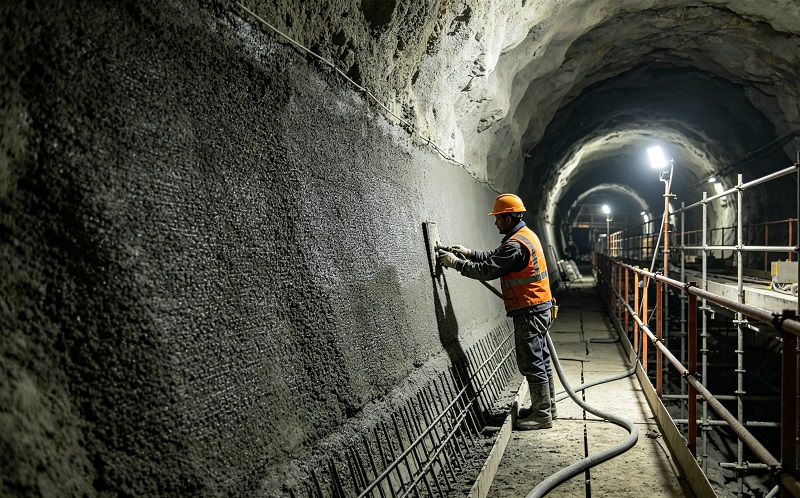
Common applications include industrial floors, tunnel shotcrete, bridge decks, precast elements, UHPC components, and railway sleepers.
Fiber shape, length, diameter, aspect ratio, tensile strength, and coating must match the concrete mix and the structural goal.
What Is Steel Fiber Reinforced Concrete?
Steel Fiber Reinforced Concrete is concrete mixed with discrete, randomly oriented steel fibers. Instead of relying only on continuous rebar, the fibers form a three-dimensional network inside the matrix. When a crack begins to open, fibers crossing the crack resist its propagation.
The result is concrete that does not fail brittlely. It keeps carrying load after the first crack appears, which is what engineers call post-crack toughness.
Micro Steel Fiber typically has a diameter between 0.12 mm and 0.3 mm and a length from 6 mm to 20 mm, though longer custom sizes are available. Its small section allows a high number of fibers per kilogram, giving dense crack bridging even in thin sections.
Core Benefits of Using Micro Steel Fiber in SFRC
1. Better Crack Control
Plain concrete cracks as it shrinks or bears load. Micro Steel Fiber bridges those micro-cracks at an early stage, limiting width and spacing. This is especially valuable in slabs, overlays, and precast parts where surface cracking is unacceptable.
2. Higher Post-Crack Toughness
After the cement matrix cracks, hooked-end or deformed Micro Steel Fiber anchors mechanically and continues to transfer stress. This residual strength is what separates true SFRC from ordinary concrete with random wire additions.
3. Improved Impact and Fatigue Resistance
Fiber-reinforced matrices absorb repeated loading far better than plain concrete. Industrial floors subjected to forklift traffic, bridge decks under dynamic loads, and tunnel linings under cyclic pressure all benefit.
4. Enhanced Durability
With tighter cracks, chlorides, water, and de-icing salts penetrate more slowly. Copper-coated or brass-coated Micro Steel Fiber adds another layer of corrosion protection, extending service life in marine and freeze-thaw environments.
5. Potential Reduction of Secondary Reinforcement
In many designs, SFRC can reduce or eliminate welded wire mesh for temperature and shrinkage control. This saves labor, speeds up placement, and removes corrosion-prone mesh from the cover zone. Structural rebar replacement still requires engineering calculation and residual-strength testing.
Typical Applications of Steel Fiber Reinforced Concrete
Application | Why Fiber Is Used | Common Fiber Choice |
|---|
Industrial floors | Impact resistance, joint stability, load transfer | Hooked-end Micro Steel Fiber |
Tunnel shotcrete | Early toughness, rebound reduction, crack control | Straight or hooked Micro Steel Fiber |
Bridge decks | Fatigue life, chloride resistance | Copper-coated hooked-end |
Precast elements | Thin-wall crack control, handling toughness | Micro Steel Fiber, glued format |
UHPC / RPC | Ultra-high tensile and post-crack performance | 2850 MPa copper-coated micro fiber |
Railway sleepers & metro segments | Dynamic load resistance, long service life | High-strength Micro Steel Fiber |
Overlays & repairs | Bonded thin-layer crack resistance | Short micro fiber, 6-13 mm |
How to Specify Micro Steel Fiber Correctly
Do not buy fiber by price per kilogram alone. Compare performance per cubic meter of qualified concrete.
Key parameters to lock down in the specification:
Length and diameter: 13 mm x 0.2 mm is a common general-purpose size; UHPC often uses 6-13 mm x 0.12-0.2 mm.
Aspect ratio (L/D): Typically 30-100. Higher ratios improve bridging but raise balling risk.
Tensile strength: 2000 MPa for general work; 2460 MPa for structural; 2850 MPa for UHPC and RPC.
Shape: Hooked-end for anchorage, straight for shotcrete, glued bundles for high dosage.
Coating: Copper/brass coating for corrosive environments and exposed architectural concrete.
Standards: Require compliance with ASTM A820 and EN 14889-1, with batch test reports.
Mixing and Placement Tips
Even the best Micro Steel Fiber fails if it balls during mixing. Practical rules:
Add fiber after aggregates, never into a dry drum.
Use glued or collated bundles for dosages above 30 kg/m³.
Prefer pan, twin-shaft, or forced mixers over drum mixers for high fiber content.
Extend mixing time slightly, but avoid over-mixing that breaks the hooks.
Run a trial mix before the full pour to check dispersion and finishability.
FAQ
Q1: What is Steel Fiber Reinforced Concrete in simple terms?
It is concrete with tiny steel wires mixed in, so cracks are bridged instead of spreading freely.
Q2: Why choose Micro Steel Fiber over macro fiber?
Micro fiber gives more fibers per kilogram, better distribution in thin sections, and cleaner surfaces.
Q3: Can Micro Steel Fiber replace rebar?
It can replace secondary mesh in many designs, but primary structural rebar still requires engineering approval.
Q4: What dosage is typical?
10-20 kg/m³ for shrinkage control, 20-40 kg/m³ for floors and shotcrete, 120-314 kg/m³ for UHPC.
Q5: Does copper coating matter?
Yes, in marine, bridge, or de-icing environments it slows corrosion and prevents rust staining.
Work with Daye for Your SFRC Projects
Daye has manufactured steel fiber since 2002 and supplies straight, hooked-end, wavy, stainless, glued, and copper-coated Micro Steel Fiber for UHPC, precast, tunnels, bridges, and industrial floors. Products follow ASTM A820 and EN 14889-1, with ISO9001 and CE-supported quality control, full batch traceability, and customizable diameter, length, coating, and packaging.
If your next project needs Steel Fiber Reinforced Concrete that performs consistently from batch one to batch fifty, contact Daye for samples, technical datasheets, and mix-design support. The right Micro Steel Fiber is not the cheapest bag. It is the fiber that cracks less, lasts longer, and costs less over the structure's life.



 Nov 02, 2026|
 View:8