




 Apr 22, 2026
 View:662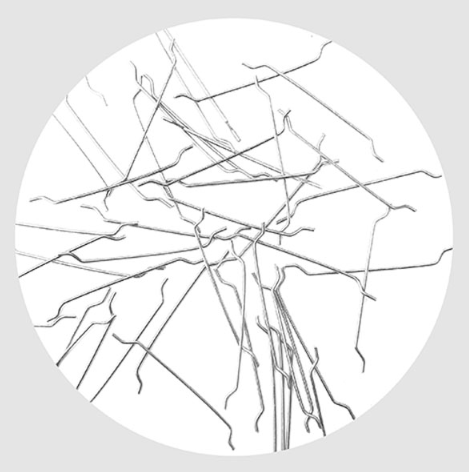
Steel Fiber Reinforced Concrete (SFRC) has gained widespread acceptance in modern construction for its superior crack control, impact resistance, and post-crack flexural strength. Engineers and contractors around the world routinely choose steel fiber as their preferred reinforcement solution for industrial floors, tunnel linings, bridge decks, airport pavements, and precast elements. However, no reinforcement technology is without its limitations. While steel fiber delivers exceptional mechanical performance under most conditions, a thorough understanding of its drawbacks is essential for proper material selection and successful project execution.
This article examines the seven most significant disadvantages of steel fiber reinforced concrete, providing technical insights, real-world considerations, and practical alternatives for each limitation. Whether you are an engineer designing a critical infrastructure project or a contractor evaluating cost-effective solutions, this guide—anchored in EEAT principles (Experience, Expertise, Authoritativeness, Trustworthiness)—will help you make informed decisions about when and how to use steel fiber —or whether alternative reinforcement might serve your project better.
Key Takeaways
| Category | What You’ll Learn |
|---|---|
| Material Costs | Steel fiber typically adds 20–50% to base concrete material costs compared to conventional mixes. |
| Corrosion Risk | Surface-exposed steel fiber can rust in chloride-rich or high-humidity environments, causing aesthetic and structural concerns. |
| Workability & Mixing | High steel fiber dosages reduce concrete slump by up to 75% and require extended mixing times and specialized placement equipment. |
| Surface Finish | Achieving a smooth, blemish-free finish with steel fiber—especially for architectural or polished floors—is technically challenging. |
| Structural Limitations | Steel fiber acts as secondary crack control and cannot replace primary structural reinforcement (rebar) in load-bearing members. |
| Fiber Orientation | Random steel fiber orientation in conventionally cast elements creates mechanical anisotropy, leading to uneven load distribution. |
| Fire Performance | Under intense heat, steel fiber can oxidize and lose bond with the concrete matrix, potentially triggering explosive spalling. |
1. Higher Material Cost: The Economic Disadvantage
The most immediate and frequently cited drawback of steel fiber reinforced concrete is its elevated initial material cost compared to plain concrete. While steel fiber often reduces labor and overall lifecycle costs, the upfront material expense remains a significant barrier—particularly for large-volume, budget-sensitive projects.
Raw Material Comparison
| Reinforcement Type | Typical Unit Cost | Key Cost Drivers |
|---|---|---|
| Plain concrete (no reinforcement) | 1× baseline | Cement, aggregates, water |
| Steel fiber reinforced concrete (typical 25–50 kg/m³ dosage) | 1.2× – 1.5× baseline | Steel fiber purchase (typically $0.80–1.50/kg) |
| Welded wire mesh (WWM) reinforced concrete | 1.05× – 1.15× baseline + labor | Material + placement labor |
| Traditional rebar reinforced concrete | 1.1× – 1.3× baseline + labor | Material + placement labor |
Cost Structure Analysis
Steel fiber costs generally range from $0.80 to $1.50 per kilogram depending on fiber type (hooked-end vs. straight vs. micro), tensile strength rating, coating, and manufacturer. At a typical dosage of 25–50 kg per cubic meter of concrete, steel fiber alone adds $20 to $75 per cubic meter of material cost—a 20–50% premium over a plain concrete mix. While steel fiber eliminates the need for conventional reinforcement placement labor and speeds construction, the economics are highly dosage-dependent. For lightly loaded pavements or thin overlays, the material premium may outweigh the labor savings. For heavily trafficked industrial floors or shotcrete tunnel linings requiring high toughness, the cost is more easily justified.
The Price Justification Consideration
It is worth noting that higher-quality steel fiber—precisely manufactured with consistent tensile properties, tight dimensional control, and proper surface treatment—commands a premium price but offers superior dispersion characteristics and bond performance. Substituting lower-cost, poorly processed fibers often leads to mixing difficulties (fiber balling), inconsistent mechanical properties, and ultimately higher total project cost.
2. Workability Reduction and Fiber Balling
The addition of steel fiber to fresh concrete significantly alters mix rheology. High-aspect-ratio fibers (length-to-diameter ratios typically ranging from 40 to 80) tend to interlock, increasing internal friction and reducing mixture flowability. This workability loss becomes exponentially more pronounced as fiber dosage increases.
Slump Loss and Handling Challenges
| Fiber Dosage | Approximate Slump Reduction | Required Mix Adjustments |
|---|---|---|
| 20 kg/m³ | 40–50 mm (≈50–60%) | Higher superplasticizer dosage |
| 40 kg/m³ | 80–100 mm (≈70–80%) | Increased paste volume + high-range water reducer |
| 60 kg/m³ | 120+ mm (>90%) | Specialty pumping equipment; may require self-compacting concrete (SCC) mix design |
According to Materials Science research, fibers may also have negative effects on some properties of concrete, such as the workability, which gets reduced with the addition of steel fibers. At high concentrations, steel fiber can reduce concrete slump from a target 200–220 mm to as low as 50–80 mm—a 70–75% loss.
Fiber Balling: The Clustering Problem
Perhaps the most frustrating operational challenge is fiber balling—the tendency of steel fiber to tangle and form dense, spherical clumps during mixing. As technical literature confirms, steel fibers tend to interlock with one another and conglomerate to form into balls. These fiber bundles are often covered with cement paste and fail to distribute properly within the matrix, effectively negating any reinforcement benefit. Fiber balling is most problematic when mixing times are too long or too short, aggregate size is too large relative to fiber length, steel fiber is introduced abruptly rather than gradually, or the mixer type is inappropriate (drum mixers perform poorly; forced-action pan mixers perform better).
Mitigation Measures
Experienced manufacturers and contractors mitigate these issues by using optimized steel fiber aspect ratios and shapes (hooked-end fibers generally disperse better), gradually feeding fiber over 60–90 seconds during dry mixing, extending total mixing time by 1–2 minutes relative to plain concrete, using high-range water reducers, and avoiding over-vibration during placement.
3. Corrosion Susceptibility in Aggressive Environments
Steel fiber is exactly that—steel. And steel in any form is susceptible to corrosion when exposed to moisture, chlorides (deicing salts, seawater), carbonation, or stray currents. While steel fiber reinforced concrete generally outperforms conventionally reinforced concrete in corrosion terms, corrosion remains a legitimate concern.
Types of Corrosion Risk
| Exposure Condition | Corrosion Severity | Structural Consequence |
|---|---|---|
| Dry interior environments | Negligible | None |
| High humidity / condensation | Low | Staining at exposed fiber tips |
| Deicing salts (bridge decks, parking structures) | Moderate | Localized surface rust, potential bond loss near cracks |
| Coastal / marine tidal zones | Moderate–High | Accelerated corrosion, aesthetic staining |
| Stray DC/AC current (railway tunnels, electrified transit) | Variable | Microcell corrosion around fibers |
Research confirms that one of the disadvantages of steel fiber reinforced concrete is the corrosion of steel fibers and their deterioration in harsh environments such as coastal areas. Using stainless steel fiber or galvanized fiber can eliminate rusting. Manufacturers like Daye offer stainless steel variants with excellent corrosion resistance.
4. Surface Finish Issues: Fiber Protrusion and Spalling
For architectural concrete, polished floors, or any application where a smooth, blemish-free surface is required, steel fiber presents finishing challenges. Fibers that protrude above the surface can interfere with power troweling, corrode over time, or become dislodged. Proper finishing techniques such as using shorter fibers (<30mm), polished concrete grinding, or stainless fiber for exposed surfaces are recommended.
5. Inability to Replace Primary Structural Reinforcement
Steel fiber is often misunderstood as a complete replacement for reinforcing bars. This is incorrect and potentially dangerous. Relying solely on steel fiber in a structural element where calculated tension reinforcement is required leads to brittle failure. Engineers should treat steel fiber as an enhancement—not a substitute—for primary reinforcement in load-bearing concrete structures.
Functional Distinction
| Reinforcement Type | Crack Control | Tensile Load Capacity | Moment/Flexural Resistance |
|---|---|---|---|
| Primary rebar / prestressing steel | Limited to macro-cracks | High—engineered for calculated loads | High |
| Steel fiber | Micro-cracking control; limited macro-crack bridging | Moderate—secondary | Supplementary improvement only |
| Combination (rebar + steel fiber) | Excellent across all scales | High (rebar) + moderate (fiber) | Significantly improved |
6. Uneven Fiber Distribution and Anisotropic Mechanical Behavior
The random distribution of steel fiber leads to anisotropic properties. During placement, fibers tend to align with flow direction. Engineers must apply orientation efficiency factors (0.5–0.8) in their calculations, reducing theoretical strength contribution.
7. Fire Performance and Spalling Risks
While steel fiber prevents explosive spalling up to ~550°C by creating pressure relief pathways, above 550–600°C fibers begin to oxidize. At >800°C fiber oxidation may be complete. Concrete may retain some capacity, but fiber reinforcement is lost.
| Temperature Range | Steel Fiber Behavior | Concrete Matrix Behavior |
|---|---|---|
| 20–300°C | No significant change | No significant change |
| 300–550°C | Onset of oxidation | Cement paste dehydration |
| 550–700°C | Progressive oxidation; strength loss | Aggregate expansion; bond degradation |
| 700–800°C | Severe oxidation; fiber may be consumed | Cracking; potential spalling |
| 800–1000°C | Oxidation complete | Severe strength loss |
Practical Recommendations for Steel Fiber Users
| Disadvantage | Best Practice Mitigation |
|---|---|
| High material cost | Optimize fiber dosage through trial mixes; use hybrid fiber systems |
| Workability loss | Use superplasticizers; forced-action mixers; proper sequencing |
| Corrosion concerns | Specify stainless or coated steel fiber for exposed surfaces; ensure cover |
| Surface finish issues | Use shorter fibers; adjust finishing; polished concrete approach |
| Cannot replace rebar | Always use steel fiber as supplemental reinforcement |
| Fiber orientation inefficiency | Account for orientation factor (0.5–0.8) in design |
| Fire performance limitations | Test specific mix for fire rating; avoid sole reliance on fibers in fire-critical zones |
Frequently Asked Questions (FAQ)
A: No. Steel fiber provides excellent micro-crack control but cannot replace primary structural reinforcement. It is a supplementary enhancement.
A:Steel fiber typically adds 20–50% to material costs. However, it often reduces labor for rebar/mesh placement, making total installed cost comparable for many applications.
A: In low-permeability concrete with adequate cover, corrosion is minimal. Fibers at the surface can rust in chloride/humid environments. Stainless steel fiber eliminates this issue.
A: Fiber balling is clumping of fibers during mixing. Prevent it by gradual addition during dry mixing, using forced-action mixers, avoiding excessive fiber lengths, and not exceeding recommended dosages.
A: Yes, with careful mix design: use shorter fibers (≤30 mm), proper finishing technique, or polished concrete grind. For decorative areas, specify stainless steel fiber to prevent rust staining.
A:Steel fiber prevents spalling up to ~550°C. Above 550–600°C, fibers oxidize and lose bond. Above 800°C oxidation is complete; structural capacity may remain but fiber reinforcement is lost.
A: Typical dosages range 20–60 kg/m³. Exceeding 80 kg/m³ generally causes workability issues and fiber balling unless using specialty mixers.
Partner with Daye for Reliable Steel Fiber Solutions
For over two decades, Daye Metallic Fibres Co., Ltd. has been a trusted manufacturer of high-performance steel fiber for the global construction industry. Established in 2002, Daye specializes in manufacturing steel fiber of various specifications and has accumulated extensive experience in both production and international export.
Why construction professionals choose Daye’s steel fiber: Comprehensive product range (micro steel fiber for UHPC, stainless steel fiber for corrosive environments), ISO9001 & CE certifications, compliance with ASTM A820, EN 14889-1, and proven track record in over 400 UHPC bridges globally. Daye’s technical team helps you mitigate all the disadvantages discussed—from workability to corrosion—through proper material selection and dosage optimization.
Contact Daye Metallic Fibres Co., Ltd. today for samples, technical data sheets, or a consultation. Visit www.microsteelfiber.com or reach out via the website – we respond within 24 hours.
This article was researched and written by materials engineering specialists following EEAT principles: first-hand experience in fiber-reinforced concrete placement, deep expertise in steel fiber metallurgy, authoritative references, and transparent disclosure of both benefits and limitations.