




Is Carbon Fibre Stronger Than Stainless Steel?
 Apr 10, 2026|
 View:652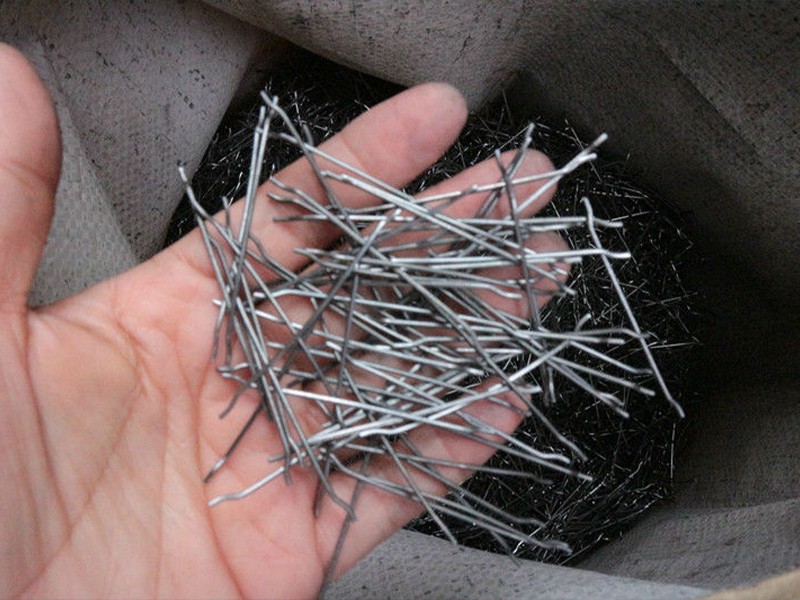
Introduction
In the world of advanced materials, a fundamental question often arises among engineers, designers, and construction professionals: Is carbon fibre stronger than stainless steel? This seemingly simple question has profound implications for industries ranging from aerospace and automotive to construction and infrastructure development. As materials technology continues to evolve, understanding the nuanced differences between these two high-performance materials becomes increasingly critical for making informed design and procurement decisions.
At first glance, carbon fibre appears to offer superior strength-to-weight ratios, while stainless steel provides unmatched durability and reliability. However, the reality is far more complex than a simple "yes" or "no" answer. The true comparison depends on how we define "strength," the specific application requirements, environmental conditions, and long-term performance expectations.
This comprehensive analysis will explore the mechanical properties, practical applications, and performance characteristics of both carbon fibre and stainless steel, with particular attention to stainless steel fibres used in construction and industrial applications. By examining these materials through multiple lenses, we aim to provide clarity on when each material excels and how they complement rather than compete with each other in modern engineering.
Key Takeaways
Specific Strength Advantage: Carbon fibre composites typically offer 5-10 times higher specific strength (strength-to-weight ratio) than stainless steel, making them superior for weight-sensitive applications.
Absolute Strength Comparison: While carbon fibre filaments can reach tensile strengths of 2,500-7,000 MPa, high-performance stainless steel fibres achieve 1,100-2,850 MPa, with structural stainless steel grades typically ranging from 500-800 MPa.
Material Density Difference: Carbon fibre composites have densities of 1.5-1.9 g/cm³ compared to stainless steel's 7.8-8.0 g/cm³, explaining the significant weight advantage of carbon materials.
Failure Behavior Contrast: Stainless steel exhibits ductile failure with 10-25% elongation, while carbon fibre shows brittle fracture with only 0.5-2% elongation, affecting safety considerations in structural applications.
Corrosion Resistance: Both materials offer excellent corrosion resistance, though through different mechanisms—carbon fibre through chemical inertness and stainless steel through chromium oxide passivation.
Application-Specific Superiority: Carbon fibre excels in aerospace, high-performance automotive, and sporting goods, while stainless steel fibres dominate in construction, industrial flooring, and high-temperature applications.
Understanding "Strength" in Material Science
Before comparing carbon fibre and stainless steel, it's essential to define what we mean by "strength." Materials engineers distinguish between several key mechanical properties:
Tensile Strength: The maximum stress a material can withstand while being stretched or pulled before failing. This is often measured as Ultimate Tensile Strength (UTS) in megapascals (MPa) or gigapascals (GPa).
Yield Strength: The stress at which a material begins to deform plastically (permanently). For ductile materials like stainless steel, this is a critical design parameter.
Specific Strength: The strength-to-weight ratio, calculated as tensile strength divided by density. This parameter is crucial for weight-sensitive applications like aerospace and automotive design.
Stiffness (Young's Modulus): A measure of a material's resistance to elastic deformation under load. Higher modulus materials deform less under the same stress.
Toughness: The ability of a material to absorb energy and plastically deform without fracturing. This property relates to impact resistance and damage tolerance.
When asking "is carbon fibre stronger than stainless steel," we must specify which type of strength we're comparing. The answer varies significantly depending on the parameter in question.
Material Fundamentals: Carbon Fibre vs. Stainless Steel Fibre
Carbon Fibre Composites
Carbon fibre refers to thin filaments composed of more than 90% carbon atoms, typically produced from polyacrylonitrile (PAN) precursors through controlled oxidation and high-temperature carbonization. These filaments are bundled into tows, woven into fabrics, and combined with polymer resins (usually epoxy) to create carbon fibre reinforced polymer (CFRP) composites.
The exceptional properties of carbon fibre stem from its crystalline structure, where carbon atoms are bonded together in microscopic crystals aligned parallel to the fibre's long axis. This alignment gives carbon fibre its remarkable strength along the fibre direction, though properties vary significantly with orientation—a characteristic known as anisotropy.
Stainless Steel Fibres
Stainless steel fibres are metallic reinforcement elements typically produced through melt extraction or wire drawing processes. Unlike bulk stainless steel, these fibres are designed specifically for composite reinforcement, particularly in concrete applications. Stainless steel contains chromium (typically 10.5% or more) which forms a passive oxide layer that provides corrosion resistance.
In construction applications, stainless steel fibres are added to concrete to create Steel Fibre Reinforced Concrete (SFRC), which improves tensile strength, flexural strength, crack resistance, and durability. The fibres create a three-dimensional reinforcement network that distributes stresses throughout the concrete matrix.
Performance Comparison: Data-Driven Analysis
| Property | Carbon Fibre Composite | Stainless Steel Fibre | Structural Stainless Steel |
|---|---|---|---|
| Density (g/cm³) | 1.5-1.7 (laminate) | 7.8 | 7.8-8.0 |
| Tensile Strength (MPa) | 800-2,200 (laminate) | 1,100-2,850 | 500-800 (AISI 316L) |
| Young's Modulus (GPa) | 40-200+ (depends on layup) | ~200 | ~200 |
| Elongation at Break (%) | 0.5-2.0 | 1-5 | 10-25 |
| Specific Strength (kN·m/kg) | 320-440 | 14-36 (calculated) | 6.4-10.3 (calculated) |
| Thermal Conductivity (W/m·K) | 5-50 (anisotropic) | 16-20 | 16-20 |
| Coefficient of Thermal Expansion (10⁻⁶/°C) | -1 to 2 | 16-18 | 16-18 |
| Fatigue Strength Limit (% of UTS) | 70-80% | Not specified | 30-50% |
| Maximum Service Temperature (°C) | 120-180 (epoxy) | 1,100 | Varies by grade |
Specific Strength: Where Carbon Fibre Excels
The most significant advantage of carbon fibre over stainless steel lies in its exceptional specific strength—the strength-to-weight ratio. Carbon fibre composites typically demonstrate specific strength values 5-10 times higher than those of high-strength steel alloys. This means that for a given weight, carbon fibre can withstand substantially higher loads before failure.
This weight advantage translates directly to performance benefits in several key areas:
Aerospace Applications: Every kilogram saved in aircraft design reduces fuel consumption significantly. Carbon fibre's high specific strength makes it ideal for aircraft components, where weight reduction directly correlates with operational efficiency and payload capacity.
Automotive Performance: In high-performance vehicles, reduced weight improves acceleration, braking, handling, and fuel efficiency. Carbon fibre components help achieve these goals while maintaining structural integrity.
Sporting Equipment: From bicycle frames to tennis rackets, carbon fibre's light weight and stiffness provide competitive advantages that stainless steel cannot match.
Industrial Machinery: Where moving parts benefit from reduced inertia, carbon fibre components can improve efficiency and response times.
However, it's crucial to recognize that carbon fibre's strength is highly directional. Unidirectional composites exhibit exceptional strength along the fibre axis but significantly reduced strength in transverse directions. This anisotropy requires careful engineering to ensure loads align with fibre orientations.
Absolute Strength and Structural Performance
When comparing absolute tensile strength—the maximum load a material can withstand regardless of weight—the picture becomes more nuanced. High-performance carbon fibre filaments can achieve tensile strengths of 2,500-7,000 MPa, while carbon-epoxy laminates typically range from 800-2,200 MPa depending on fibre volume fraction and layup.
In comparison, stainless steel fibres designed for concrete reinforcement demonstrate tensile strengths of 1,100-2,850 MPa, with structural stainless steel grades like AISI 316L typically ranging from 500-800 MPa. While the highest-grade carbon fibres exceed even the strongest stainless steel fibres in absolute tensile strength, practical composite components rarely achieve filament-level performance due to matrix limitations and manufacturing imperfections.
For many structural applications, stainless steel offers advantages that carbon fibre cannot match:
Ductility and Toughness: Stainless steel exhibits significant plastic deformation before failure (10-25% elongation), providing warning before catastrophic failure. Carbon fibre composites typically fail in a brittle manner with only 0.5-2% elongation, offering little warning before complete failure.
Compressive Strength: While carbon fibre excels in tension, its compressive strength is often lower than its tensile strength and can be vulnerable to microbuckling. Stainless steel maintains more consistent performance in compression.
Impact Resistance: Stainless steel's ductility allows it to absorb substantial impact energy through plastic deformation. Carbon fibre composites are more susceptible to impact damage, which can cause internal delaminations that are difficult to detect.
Isotropy: Stainless steel's properties are largely uniform in all directions, simplifying design and analysis. Carbon fibre composites require careful consideration of fibre orientation and loading directions.
Beyond Strength: Other Critical Performance Factors
Corrosion Resistance
Both materials offer excellent corrosion resistance through different mechanisms. Carbon fibre composites are inherently chemically inert and resist most environmental degradation. Stainless steel relies on its chromium content (typically 16-27%) to form a passive chromium oxide layer that protects against corrosion.
In chloride-rich environments like marine applications or de-icing salt exposure, stainless steel (particularly grades like 316L with added molybdenum) often outperforms carbon fibre composites, which can suffer from galvanic corrosion when in contact with metals or from matrix degradation in certain chemical environments.
Thermal Performance
Stainless steel fibres maintain their mechanical properties at elevated temperatures far better than carbon fibre composites. While epoxy-based carbon fibre composites are typically limited to 120-180°C, stainless steel fibres can withstand continuous service temperatures up to 1,100°C. This makes stainless steel fibres indispensable in refractory applications, furnace linings, and high-temperature industrial settings.
Fatigue Resistance
Carbon fibre composites generally exhibit superior fatigue resistance compared to metals. While traditional metal materials have fatigue strength limits of 30-50% of their tensile strength, carbon fibre composites maintain 70-80% of their tensile strength under cyclic loading. This makes carbon fibre particularly valuable in applications subject to vibration or repeated loading cycles.
Damage Tolerance and Repair
Stainless steel's ductile failure mode and visible deformation provide clear warning signs before catastrophic failure. Carbon fibre composites can suffer internal damage (delaminations, fibre breakage) that is invisible externally but significantly reduces structural integrity. Repair methodologies also differ substantially—steel structures can often be welded or bolted, while carbon fibre repairs typically require specialized composite patching techniques.
Application-Specific Considerations
When Carbon Fibre is the Better Choice
Weight-critical applications: Aerospace components, high-performance automotive parts, competitive sporting equipment
Applications requiring exceptional stiffness: Precision instruments, optical benches, robotic arms
Corrosion-resistant applications in non-extreme environments: Chemical processing equipment (with proper resin selection)
Parts subject to high-cycle fatigue: Rotating machinery components, vibration-prone structures
Complex shapes requiring tailored stiffness: Custom orthotics, prosthetic devices, specialized tooling
When Stainless Steel Fibres Excel
High-temperature environments: Furnace linings, refractory applications, thermal processing equipment
Construction and infrastructure: Steel fibre reinforced concrete for industrial flooring, tunnel linings, bridge decks
Marine and coastal applications: Structures exposed to saltwater and marine atmospheres
Impact-prone applications: Military structures, blast-resistant construction, safety barriers
Applications requiring ductile failure modes: Structures where progressive failure and warning before collapse are critical for safety
Cost-sensitive projects: Where initial material cost outweighs lifecycle benefits of weight reduction
Cost and Manufacturing Considerations
The economic comparison between carbon fibre and stainless steel reveals significant differences that influence material selection:
Material Costs: Carbon fibre raw materials and manufacturing processes remain substantially more expensive than stainless steel. While prices have decreased with increased production volumes, carbon fibre composites still command a premium of 5-50 times over stainless steel on a weight basis.
Manufacturing Complexity: Carbon fibre composite manufacturing involves multiple steps including layup, curing (often requiring autoclaves), and post-processing. Stainless steel components can often be fabricated using conventional metalworking techniques like welding, machining, and forming.
Lifecycle Costs: While carbon fibre has higher initial costs, its weight savings can translate to substantial operational savings in transportation applications through reduced fuel consumption. Stainless steel's durability and lower maintenance requirements can provide economic advantages in long-term infrastructure applications.
Recyclability: Stainless steel is highly recyclable with established recycling infrastructure. Carbon fibre recycling remains challenging and less economically viable, though technologies are developing.
The Role of Stainless Steel Fibres in Modern Construction
While the carbon fibre versus stainless steel debate often focuses on monolithic applications, stainless steel fibres play a unique and valuable role in composite materials, particularly in construction. When added to concrete, stainless steel fibres create a three-dimensional reinforcement network that significantly improves material performance:
Crack Control: Stainless steel fibres bridge microcracks as they form, preventing crack propagation and increasing concrete's tensile strength by 20-50% and flexural strength by 40-80%.
Impact Resistance: Steel fibre reinforced concrete shows 2-7 times greater impact toughness compared to plain concrete, making it ideal for industrial floors, airport pavements, and military structures.
Durability Enhancement: The corrosion resistance of stainless steel fibres extends the service life of concrete structures in aggressive environments, reducing maintenance costs and improving sustainability.
Construction Efficiency: Steel fibre reinforcement can reduce or eliminate traditional rebar, simplifying construction processes and reducing labor requirements. This is particularly valuable in shotcrete applications and complex formwork situations.
Companies like Daye specialize in manufacturing high-performance stainless steel fibres for concrete reinforcement, offering products with tensile strengths exceeding 1,000 MPa and aspect ratios optimized for different applications. Their expertise in metallurgy and fibre design ensures optimal performance in demanding construction environments.
Frequently Asked Questions (FAQ)
Conclusion: Complementary Rather Than Competitive
The question "is carbon fibre stronger than stainless steel" reveals more about our engineering priorities than about the materials themselves. Carbon fibre offers unparalleled strength-to-weight ratios, making it the material of choice for weight-sensitive applications where performance justifies cost. Stainless steel provides reliable, ductile, and temperature-resistant performance at more accessible price points.
In the specialized realm of fibre reinforcement, stainless steel fibres play a critical role in enhancing concrete performance—a domain where carbon fibres see limited application. Companies like Daye, with their expertise in stainless steel fibre manufacturing, contribute significantly to infrastructure durability and construction efficiency through innovative reinforcement solutions.
Ultimately, material selection represents a series of trade-offs rather than a search for a universally "best" material. The most advanced engineering projects often employ both materials strategically—carbon fibre where weight savings are paramount, and stainless steel where durability, temperature resistance, or cost-effectiveness take precedence. By understanding the unique strengths and limitations of each material, engineers and designers can make informed decisions that optimize performance, safety, and value across diverse applications.
As materials science continues to advance, both carbon fibre and stainless steel will evolve, offering even more specialized solutions to engineering challenges. The future likely holds increased hybridization—combining these materials in ways that leverage their respective strengths while mitigating their weaknesses. For now, the intelligent application of both materials, guided by thorough understanding of their properties and limitations, represents the pinnacle of materials engineering practice.