




 Jun 12, 2026
 View:310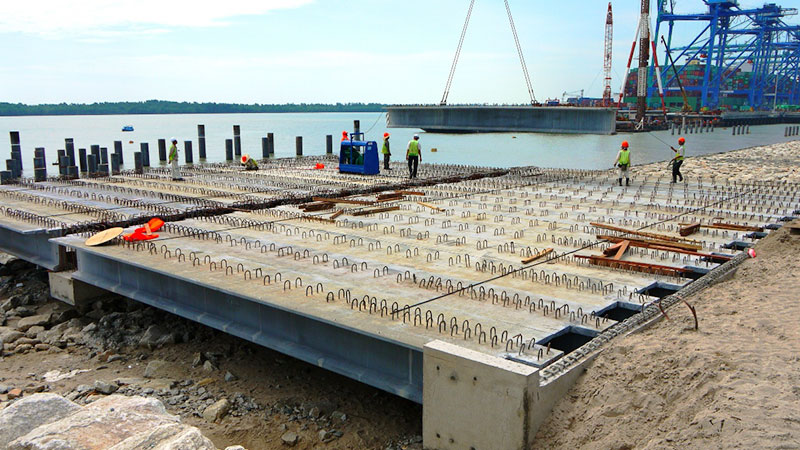
Ultra-High Performance Concrete (UHPC) has revolutionized the construction industry, and at the heart of this revolution lies microsteel fibre. Unlike conventional steel fibers used for general crack control, microsteel fibre offers a distinct set of advantages: it is finer (typically 0.1–0.3 mm in diameter), shorter (up to 30 mm in length), and characterized by high aspect ratios that enable uniform dispersion throughout the concrete matrix. Whether you are a structural engineer specifying materials for a bridge deck, a contractor handling industrial flooring, or a buyer sourcing for UHPC precast elements, selecting the right microsteel fibre is a decision that directly impacts the tensile strength, flexural toughness, crack resistance, and long-term durability of your structure. However, the procurement process involves multiple variables: fiber geometry, tensile strength, coating type, international standards compliance, and dosage optimization. This comprehensive buyer‘s guide breaks down every consideration you need to know, from the science behind microsteel fibre reinforcement to practical supplier evaluation criteria, helping you make an informed, cost-effective choice for your next concrete project.
Key Takeaways
| Category | What This Guide Covers |
|---|---|
| Product Definition | Microsteel fibre vs. macro steel fiber — purpose, typical dimensions (0.1–0.3 mm diameter, up to 30 mm length), and primary function |
| Key Selection Parameters | Diameter, length, aspect ratio (length/diameter typically 30–100), tensile strength (≥ 2,000 MPa recommended for UHPC) |
| Coating Types | Copper/brass-coated vs. non-coated — corrosion protection and bond enhancement benefits |
| Dosage Guidelines | Project-specific dosage ranges from light crack control (10–40 kg/m³) to UHPC reinforcement (150–314 kg/m³) |
| Standards Compliance | ASTM A820, EN 14889-1, ISO 13270 — what each standard means for your project’s quality assurance |
| Supplier Selection | Key evaluation factors: manufacturing capability, quality consistency, certification, technical support, and global export experience |
Understanding Microsteel Fibre: What It Is and Why It Matters
Before diving into selection criteria, it is essential to understand what distinguishes microsteel fibre from other concrete reinforcement options.
Definition and Typical Specifications
Microsteel fibre generally refers to steel fibers with a diameter typically less than 0.3 mm, fine enough to disperse uniformly within high-density concrete matrices such as UHPC. Unlike macro fibers (larger diameters intended for primary structural reinforcement), microsteel fibre excels at controlling early-age shrinkage cracks, enhancing ductility, and boosting fatigue and impact resistance. The addition of microsteel fibre can significantly improve the density of the interfacial transition zone, inhibit crack propagation, and enhance the mechanical properties of concrete.
Typical microsteel fibre specifications include:
Diameter: 0.1 mm – 0.3 mm (most commonly 0.2 mm)
Length: 6 mm – 30 mm (common lengths: 12 mm, 13 mm, 20 mm)
Aspect Ratio (l/d): 30 – 100 (determines how effectively the fiber bridges cracks)
Tensile Strength: ≥ 2,000 MPa (can reach over 2,850 MPa for high-performance variants)
Shape: Straight or deformed (wavy, hooked, or embossed ends for enhanced mechanical anchorage)
Coating: Brass/copper-coated for corrosion resistance and improved bonding
How Microsteel Fibre Reinforces Concrete
The fundamental mechanism of microsteel fibre reinforcement lies in its ability to bridge micro-cracks at their earliest stage of formation. When concrete undergoes tensile stress or shrinkage, micro-cracks begin to form. Microsteel fibre intercepts these cracks, transferring stress across the crack interface and preventing the crack from propagating into a macro-crack that compromises structural integrity. The inclusion of microsteel fibre is an efficient strategy for improving concrete‘s characteristics like tensile strength, compressive strength, and flexural strength. Moreover, microsteel fibre enhances the density of the interface transition zone, leading to superior durability and longer service life.
Microsteel Fibre vs. Macro Steel Fiber: Key Distinctions
| Feature | Microsteel Fibre | Macro Steel Fiber |
|---|---|---|
| Typical Diameter | 0.1 – 0.3 mm | 0.5 – 1.0 mm |
| Typical Length | 6 – 30 mm | 30 – 60 mm |
| Primary Function | Early-age crack control, micro-crack bridging, ductility enhancement | Post-crack load transfer, structural toughness, impact resistance |
| Typical Dosage | 10 – 80 kg/m³ (light to moderate) | 25 – 60 kg/m³ |
| Best Applications | UHPC, high-performance concrete, RPC cover plates, thin precast elements | Industrial floors, tunnel shotcrete, heavy-duty pavements |
The Science Behind Microsteel Fibre Reinforcement
Understanding the material science behind microsteel fibre will help you ask the right questions when evaluating suppliers.
How Microsteel Fibre Works at the Microscopic Level
When microsteel fibre is uniformly dispersed in the concrete mix, three reinforcement mechanisms come into play:
Crack bridging: Fibers that intersect a developing crack resist crack opening by transferring tensile stress from the concrete matrix to the fiber. The fiber must have sufficient tensile strength and bond strength to the matrix to be effective.
Fiber pull-out mechanism: As the crack widens, the microsteel fibre begins to be pulled out of the matrix. The force required for pull-out depends on the fiber‘s embedment length, surface condition, and shape (straight vs. deformed). This pull-out process dissipates significant energy, contributing to post-crack toughness.
Stress redistribution: The random three-dimensional distribution of microsteel fibre within the matrix creates a network that redistributes localized stresses over a wider area, preventing stress concentration that would otherwise lead to premature failure.
Research demonstrates that microsteel fibre with higher aspect ratios delivers superior flexural strength. Studies on UHPC containing microsteel fibre with an aspect ratio of 65 achieved compressive strength exceeding 140 MPa; mixtures featuring microsteel fibre with even higher aspect ratios exhibited the highest flexural strength.
The Role of Copper Coating
Copper-coated or brass-coated microsteel fibre offers two critical advantages:
Corrosion protection: The copper coating acts as a barrier, protecting the steel core from moisture and chlorides — particularly important in marine environments, bridge decks exposed to deicing salts, or any chloride-rich setting.
Enhanced bond strength: The coating improves the chemical bond between the microsteel fibre and the cement paste, promoting stronger interfacial bonding for improved load transfer after cracking.
Key Parameters for Selecting Microsteel Fibre
When evaluating microsteel fibre products for your project, these technical parameters should be at the top of your checklist.
1. Diameter and Length: Finding the Right Aspect Ratio
The aspect ratio (length ÷ diameter) of microsteel fibre is the most critical geometric parameter. As a general rule, steel fibers with aspect ratios between 30 and 80 are commonly used for concrete reinforcement. Exceeding an aspect ratio of 80 at high dose rates can lead to mixing difficulties (fiber balling).
Guidelines for selecting diameter and length:
| Application | Recommended Diameter | Recommended Length | Aspect Ratio |
|---|---|---|---|
| UHPC precast elements | 0.2 mm | 13 mm | 65 |
| RPC cover plates | 0.2 mm | 20 mm | 100 |
| High-speed railway components | 0.2 mm | 13–20 mm | 65–100 |
| Bridge pavements | 0.18–0.2 mm | 13 mm | 65–72 |
| Thin overlays / repair mortars | 0.12–0.15 mm | 6–8 mm | 40–60 |
For general guidance, microsteel fibre with higher aspect ratios (closer to 100) provides superior crack control but requires careful mixing to avoid balling. For UHPC applications — where dense packing and high fiber volumes are standard — fibers with aspect ratios around 65 offer an optimal balance of dispersion and performance.
2. Tensile Strength: The Baseline for Performance
High tensile strength is non-negotiable for microsteel fibre. The fiber must be strong enough to withstand the tensile forces transmitted across cracks without breaking prematurely. Steel fiber tensile strength typically ranges between 800 MPa and 2,000 MPa for standard fibers, with high-performance microsteel fibre reaching 2,850 MPa and above.
Recommended tensile strength targets by application:
General crack control (normal-strength concrete): ≥ 1,100 MPa
High-performance concrete (HPC): ≥ 2,000 MPa
Ultra-High Performance Concrete (UHPC): ≥ 2,850 MPa
Bridge decks and heavy-load pavements: ≥ 2,000 – 2,850 MPa
3. Fiber Shape: Smooth vs. Deformed
Microsteel fibre can be manufactured with various shapes — straight, wavy, hooked-end, or embossed. The shape directly influences:
Bond performance: Deformed fibers (wavy or hooked) provide mechanical anchorage, offering higher pull-out resistance than straight fibers
Dispersion characteristics: Some shapes disperse more easily during mixing than others
For microsteel fibre used in UHPC, embossed (wavy) or hooked-end shapes are preferred because the deformation creates additional mechanical interlocking with the dense cementitious matrix, maximizing load transfer after cracking.
4. Surface Coating: Brass/Copper vs. Non-Coated
The coating on microsteel fibre serves two purposes: corrosion protection and bond enhancement.
| Coating Type | Advantages | Best Applications |
|---|---|---|
| Brass/Copper-coated | Excellent corrosion resistance; stronger interfacial bond; prevents rust staining | Marine environments, bridges with deicing salts, architectural exposed concrete, UHPC |
| Non-coated (plain steel) | Lower cost | Dry interior applications, non-chloride environments where surface exposure is not a concern |
For UHPC, high-speed railway components, and RPC cover plates — where long-term durability and high-strength requirements intersect — brass-coated microsteel fibre is the industry standard.
5. Dosage: How Much Microsteel Fibre Do You Really Need?
Determining the optimal dosage of microsteel fibre is application-specific. Too little fiber provides inadequate reinforcement; too much can cause workability issues and fiber balling.
Typical dosage ranges for microsteel fibre:
| Application Type | Dosage Range (kg/m³) | Performance Objective |
|---|---|---|
| Light crack control (non-structural) | 10 – 20 | Reduce shrinkage cracking |
| Industrial floors and pavements | 20 – 30 | Improved abrasion resistance, moderate toughness |
| Tunnel shotcrete | 25 – 35 | Enhanced impact resistance, reduced spalling |
| Bridge decks | 40 – 60 | Fatigue resistance, crack control under cyclic loading |
| UHPC structural elements | 150 – 314 | Ultra-high compressive strength, post-crack ductility |
For road projects, recommended dosage of microsteel fibre is 30–80 kg/m³; for bridge structures, 50–100 kg/m³. For high-strength self-compacting concrete, workability begins to reduce significantly above 0.70% fiber content by volume, so mixing adjustments may be required at higher dosages.
Matching Microsteel Fibre to Application Requirements
Different projects impose different demands on microsteel fibre. Below is a breakdown of how to match fiber specifications to specific application categories.
Ultra-High Performance Concrete (UHPC)
UHPC demands the highest-quality microsteel fibre. Typical requirements include diameter ≤ 0.2 mm, length 13–20 mm, brass coating, tensile strength ≥ 2,850 MPa, and dosage 150–200 kg/m³. The microsteel fibre must be capable of withstanding the low water-to-binder ratios and high packing densities characteristic of UHPC. Microsteel fibre is widely used in UHPC precast components, high-speed railway prefabricated parts, and RPC cover plates.
Bridge Decks and Highway Pavements
Bridges and heavy-duty pavements face dynamic loading, deicing salts, and freeze-thaw cycles. Microsteel fibre must have brass coating for corrosion resistance and tensile strength ≥ 2,000 MPa. Recommended length is 13 mm for uniform dispersion. Microsteel fibre has been successfully applied to major infrastructure projects such as the artificial island roadway of the Hong Kong-Zhuhai-Macao Bridge and the runway of Guangzhou Baiyun International Airport.
Tunnels and Mining Shotcrete
Tunnel applications require microsteel fibre that enhances impact resistance and prevents spalling. Both straight and hooked-end shapes are suitable. Recommended dosage is 25–35 kg/m³. Microsteel fibre is extensively used in tunnel linings and shotcrete applications.
Precast UHPC Components
Precast components — such as utility covers, cable trays, and architectural panels — demand microsteel fibre with consistent geometry for predictable performance. Recommended specifications include diameter 0.2 mm, length 13 mm, brass coating, and tensile strength ≥ 2,850 MPa.
International Standards and Quality Certifications
No single international standard exclusively covers microsteel fibre, but a robust framework of global specifications ensures quality and consistency. When evaluating suppliers, always verify compliance with the following:
ASTM Standards
ASTM A820/A820M — The primary US standard for steel fibers in concrete, specifying classification by type, tensile strength, and dimensional tolerances. It identifies five basic types of steel fibers based on their manufacturing method: cold-drawn wire, cut sheet, melt-extracted, mill cut, and modified cold-drawn wire.
ASTM C1609/C1609M — Evaluates flexural performance of fiber-reinforced concrete beams, quantifying post-crack toughness and residual strength.
EN Standards
EN 14889-1:2006 — The European standard for steel fibers in concrete, covering definitions, classifications, performance requirements, and conformity criteria. It classifies steel fibers into five groups: cold-drawn wire, cut sheet, melt extracted, shaved cold drawn wire, and milled from blocks.
EN 14651 — Specifies the flexural tensile strength test method using notched beams to measure residual post-cracking strengths.
ISO Standards
ISO 13270:2013 — Outlines terminology, dimensions, tolerances, and mechanical/geometrical requirements for steel fibers, explicitly including micro types.
ISO 23407:2020 — Provides a standardized bending test to determine the load-crack opening curve for characterizing post-cracking behavior.
Why Standards Compliance Matters
When a manufacturer certifies that its microsteel fibre conforms to ASTM A820 and EN 14889-1, it provides third-party validation of product quality. These standards establish minimum tensile strength requirements, dimensional tolerances, and bend testing protocols that ensure the microsteel fibre will perform as expected in your concrete mix.
How to Evaluate and Select a Microsteel Fibre Supplier
Beyond product specifications, the reliability of your microsteel fibre source is equally important. Here are the key evaluation criteria for selecting a supplier.
1. Manufacturing Capability and Scale
Evaluate the supplier’s manufacturing capacity. What is the annual production capacity? Does the supplier manufacture in-house or rely on subcontractors? In-house manufacturing ensures tighter quality control and consistent product specifications. The microsteel fibre industry is projected to grow at a CAGR of approximately 5.9% through 2035, driven by increasing demand for high-performance concrete applications. A supplier with demonstrated scale and experience is better positioned to meet your project‘s volume requirements.
2. Quality Control Systems
Suppliers should maintain ISO9001 Quality Management System certification. Beyond the certificate itself, ask: What in-house testing capabilities does the supplier have? Are tensile strength tests performed on each production batch? Is dimensional consistency monitored continuously? Are outgoing shipments subject to inspection before release? The answers to these questions reveal the robustness of the supplier’s quality assurance processes.
3. Compliance with International Standards
Verify that the microsteel fibre meets ASTM A820 and EN 14889-1. CE certification is a strong indicator of compliance with European requirements. Additionally, ask for test reports — ideally from an independent third-party laboratory — confirming that the product meets claimed specifications.
4. Technical Support and Application Knowledge
The best microsteel fibre supplier offers technical support that extends beyond product delivery. Do they provide dosage recommendations based on your specific project requirements? Can they assist with mixing protocol adjustments to avoid fiber balling? Can they supply mix design optimization suggestions for your concrete formulation? Suppliers with deep application experience help you avoid costly trial-and-error and ensure the microsteel fibre delivers maximum performance in your specific concrete mix.
5. Export Experience and Global Track Record
If you are sourcing internationally, the supplier‘s export experience matters. Look for demonstrated success in shipping to your region. Have they successfully exported to markets with your similar quality requirements (Europe, North America, Australia, Southeast Asia)? A supplier with a proven global footprint is more likely to understand international documentation requirements, logistics, and quality expectations.
6. Customer Feedback and Industry Reputation
Peer feedback provides invaluable insight. Seek testimonials from customers who have used the supplier‘s microsteel fibre in applications similar to yours. How has the product performed over time? Has the supplier been responsive to technical inquiries? Consistency of quality across multiple shipments is often the most telling indicator of a supplier’s reliability.
Selection Checklist for Microsteel Fibre Buyers
Use this checklist when evaluating microsteel fibre options and suppliers:
Product Specifications
✓ Diameter: ≤ 0.3 mm (0.2 mm preferred for UHPC)
✓ Length: 6–30 mm (13 mm is most common)
✓ Aspect ratio: Documented (target 65–100 based on application)
✓ Tensile strength: ≥ 2,000 MPa for high-performance applications
✓ Shape: Straight, hooked-end, or embossed wavy
✓ Coating: Brass/copper-coated for corrosion protection (if required)Standards Compliance
✓ ASTM A820/A820M compliance verified
✓ EN 14889-1 compliance verified
✓ ISO 9001 quality system certification
✓ CE marking (for European projects)Supplier Evaluation
✓ In-house manufacturing (not a trading intermediary)
✓ Annual production capacity (for volume assurance)
✓ In-house testing laboratory capabilities
✓ Export experience to your target region
✓ Positive customer references available
✓ Technical support offered beyond product salesDosage and Mixing Support
✓ Recommended dosage range provided for your application
✓ Mixing protocol guidance available
✓ Fiber balling prevention recommendations
Frequently Asked Questions (FAQ)
A:Microsteel fibre is used to reinforce ultra-high performance concrete (UHPC), high-performance concrete (HPC), reactive powder concrete (RPC), and high-speed railway prefabricated components. It provides superior crack control, enhanced tensile strength, improved flexural toughness, and increased durability in demanding applications such as bridges, tunnels, industrial floors, and precast elements.
A: Dosage depends entirely on the application. Light crack control requires 10–20 kg/m³; industrial floors and pavements need 20–30 kg/m³; tunnel shotcrete uses 25–35 kg/m³; bridge decks benefit from 40–60 kg/m³; and UHPC structural elements require 150–314 kg/m³. For road projects, 30–80 kg/m³ is recommended; for bridge structures, 50–100 kg/m³.
A: Brass-coated or copper-coated microsteel fibre provides excellent corrosion resistance, even in chloride-rich environments like marine structures or bridges exposed to deicing salts. Non-coated steel fibers can rust if exposed at the concrete surface, which is why brass-coated versions are preferred for architectural or exposed applications.
A:Microsteel fibre has a smaller diameter (0.1–0.3 mm) and shorter length (6–30 mm), designed primarily for micro-crack control and ductility enhancement. Macro steel fiber has larger diameter (0.5–1.0 mm) and longer length (30–60 mm), designed for post-crack structural load transfer and impact resistance. Micro types excel in UHPC; macro types are used in industrial floors, shotcrete, and heavy-duty pavements.
A: A high-quality microsteel fibre should comply with ASTM A820/A820M (US standard), EN 14889-1 (European standard), and ideally ISO 13270 (global standard). CE certification confirms compliance with European requirements. These standards ensure consistent tensile strength, dimensional tolerances, and mechanical performance.
A: Fiber balling occurs when fibers tangle into dense clumps instead of dispersing uniformly. To prevent this: add microsteel fibre gradually during dry mixing (not as a single dump), use forced-action mixers rather than drum mixers, extend total mixing time by 1–2 minutes compared to plain concrete, avoid using oversized aggregates relative to fiber length, and consider using fibers with optimized shapes for dispersion (hooked-end or embossed fibers generally perform better).
A: No. Microsteel fibre provides micro-crack control, ductility enhancement, and improved fatigue resistance — but it cannot replace primary structural reinforcement (rebar) in load-bearing members. It is a supplementary reinforcement that works alongside rebar, not a substitute for it. For flexural members such as beams and slabs, microsteel fibre enhances performance but does not eliminate the need for properly designed steel reinforcement.
A: For UHPC applications, a diameter of 0.2 mm and length of 13–20 mm is the industry standard. This combination provides an aspect ratio around 65–100, which has been shown in research to achieve compressive strengths exceeding 140 MPa when used at optimal dosages with appropriate mix designs. Brass coating is strongly recommended for corrosion resistance and improved bond strength.
A: Request material test reports (MTRs) confirming tensile strength, dimensional consistency, and compliance with ASTM A820 or EN 14889-1. Ask for independent third-party test results, not just in-house data. For critical projects, order a trial batch for mixing and performance validation before committing to full-scale production. A reliable supplier will provide samples and technical support during the validation phase.
A: The global loose steel fibers market — which includes micro steel fibers — was valued at approximately US$1.4 billion in 2025 and is projected to reach US$2.5 billion by 2035, growing at a CAGR of approximately 5.9%, driven by increasing demand for high-performance concrete in infrastructure projects. The Asia-Pacific region is expected to lead this growth due to rapid urbanization and infrastructure development.
Why Choose Daye as Your Microsteel Fibre Partner
Choosing the right microsteel fibre is about more than product specifications — it is about partnering with a manufacturer that understands your application, supports your project from start to finish, and delivers consistently high-quality materials that meet international standards.
Ganzhou Daye Metallic Fibres Co., Ltd. (Daye) has been a trusted name in the steel fiber industry since its establishment in 2002. Specializing in the manufacturing of various specifications of steel fiber, including microsteel fibre, Daye has accumulated over two decades of experience in production and international export.
Why Construction Professionals Across the Globe Trust Daye‘s Microsteel Fibre
Advanced Manufacturing Capabilities: Daye‘s facility spans 20,000 square meters, equipped with state-of-the-art production lines and precise testing instruments. The company maintains an annual output exceeding 10,000 metric tons of steel fiber, ensuring reliable supply for projects of all scales.
Comprehensive Product Range: Daye manufactures microsteel fibre in multiple specifications — including diameters of 0.2 mm with lengths of 6 mm, 8 mm, 13 mm, 15 mm, and 20 mm — both brass-coated and non-coated variants, with straight, wavy, and hooked-end shapes.
International Standards Compliance: Daye‘s microsteel fibre complies with ASTM A820, EN 14889-1, and ISO9001 quality system certification. The company holds CE certification and has passed strict tests supervised by national metallic quality supervising and testing centers.
Proven Global Track Record: Daye’s products have been successfully applied to landmark projects including the artificial island roadway of the Hong Kong-Zhuhai-Macao Bridge, the runway of Guangzhou Baiyun International Airport, and numerous UHPC bridges worldwide. The company exports to over 28 countries, including Germany, Norway, the United States, Canada, Australia, and across Southeast Asia.
Technical Support You Can Rely On: Daye offers more than products. The technical team provides application-specific dosage recommendations, mixing guidance, and ongoing support to ensure your microsteel fibre delivers maximum performance in your concrete mix.
Take the Next Step: Partner with Daye for Your Microsteel Fibre Needs
Selecting the right microsteel fibre is a critical decision that affects the performance, durability, and longevity of your concrete structures. From understanding the key selection parameters — diameter, aspect ratio, tensile strength, coating type, and international standards — to evaluating supplier capabilities and application-specific dosage requirements, this guide has provided the framework you need to make an informed choice.
When you are ready to source high-quality microsteel fibre backed by decades of manufacturing expertise, global export experience, and technical support, Daye is your trusted partner.
Contact Daye Metallic Fibres Co., Ltd. today to request samples, technical data sheets, or a consultation with our fiber reinforcement specialists.
Economic and Technical Development Zone, Ganzhou City, Jiangxi Province, China
This buyer‘s guide was developed following EEAT principles (Experience, Expertise, Authoritativeness, Trustworthiness), drawing on technical research, international standards documentation, and practical application insights from real-world infrastructure projects.