




Which Type Delivers Superior Concrete Reinforcement?
 May 28, 2026|
 View:453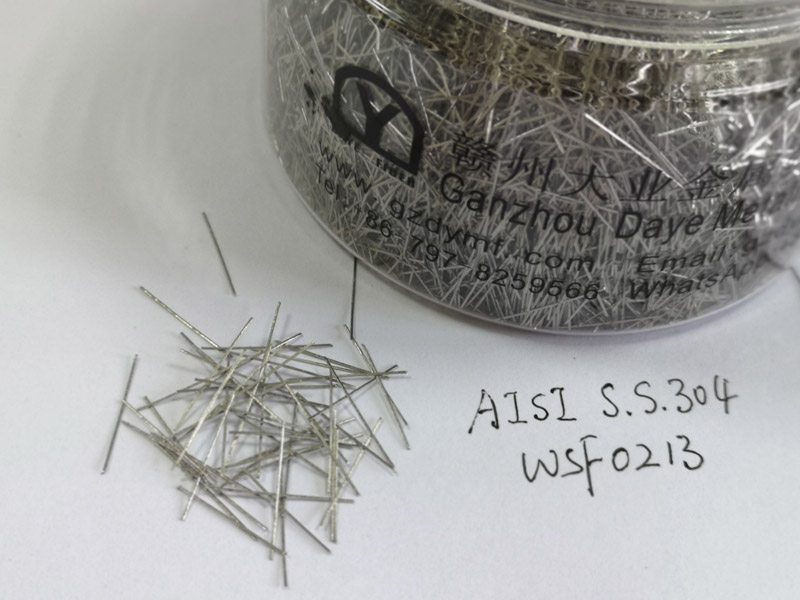
In the world of modern construction, concrete is no longer just a simple mix of cement, water, and aggregates. The introduction of microsteel fibres has revolutionized how we build, adding unprecedented strength, durability, and crack resistance to concrete structures. But with various microsteel fibre types available—from straight and hooked-end to wavy and stainless steel—how do you choose the right one for your project?
This comprehensive guide dives deep into the critical comparison of microsteel fibre types for concrete reinforcement. We'll explore their unique properties, performance characteristics, and ideal applications, providing you with the knowledge to make an informed decision that ensures structural integrity and long-term performance.
Key Takeaways
- Hooked-end microsteel fibres generally provide the best balance of tensile strength improvement and post-crack toughness due to their superior mechanical anchorage.
- Copper-coated and stainless steel micro fibresoffer exceptional corrosion resistance, making them ideal for marine environments, wastewater treatment plants, and structures exposed to de-icing salts.
- Straight microsteel fibres excel in controlling early-age shrinkage cracks and improving impact resistance but may require higher dosages for equivalent structural performance.
- Fibre geometry and aspect ratio significantly influence workability, dispersion, and final mechanical properties—critical factors often overlooked in specification.
- International standards compliance (ISO, ASTM, EN) ensures quality and performance consistency across different microsteel fibre types and manufacturers.
Understanding Microsteel Fibres: The Basics
Microsteel fibres are short, discrete steel filaments typically ranging from 6mm to 30mm in length and 0.1mm to 0.3mm in diameter. Unlike traditional rebar or macro fibres, these micro-scale reinforcements are uniformly dispersed throughout the concrete matrix, creating a three-dimensional reinforcement network that significantly enhances concrete's mechanical properties.
The primary mechanism involves crack bridging—when micro-cracks initiate in concrete under stress, the fibres spanning the crack resist its opening and propagation. This results in improved tensile strength, flexural capacity, impact resistance, and durability compared to plain concrete or even traditionally reinforced concrete.
The Major Microsteel Fibre Types: A Detailed Comparison
1. Straight Microsteel Fibres
Straight microsteel fibres represent the simplest geometric form, featuring uniform diameter along their length without surface deformations or end treatments. These fibres are typically manufactured through precise wire-drawing and cutting processes, resulting in consistent dimensions and mechanical properties.
Performance Characteristics:
- Tensile Strength: Generally ranges from 2,000 to 2,850 MPa
- Bond Mechanism: Primarily relies on chemical adhesion and friction with the cement matrix
- Workability Impact: Minimal interference with concrete flow due to smooth surface
- Crack Control: Excellent for controlling plastic shrinkage cracks during early curing
- Dispersion: Uniform distribution with minimal balling tendency
Best Applications: Industrial floors, shotcrete applications, precast elements where early-age crack control is critical, and projects requiring enhanced impact resistance without significant structural reinforcement needs.
2. Hooked-End Microsteel Fibres
Hooked-end microsteel fibres feature deformed ends that provide mechanical anchorage within the concrete matrix. This geometric enhancement significantly improves pull-out resistance compared to straight fibres, leading to better post-crack performance and energy absorption.
Performance Characteristics:
- Tensile Strength: Similar to straight fibres (2,000-2,850 MPa) but with enhanced bond strength
- Bond Mechanism: Combination of chemical adhesion, friction, and mechanical interlock
- Workability Impact: Slightly reduced compared to straight fibres but manageable with proper mix design
- Post-Crack Behavior: Superior toughness and residual strength after cracking
- Structural Performance: Excellent for replacing or reducing traditional rebar in certain applications
Best Applications: Structural elements requiring high toughness, bridge decks, seismic-resistant construction, parking structures, and heavy-duty industrial floors subjected to dynamic loads.
3. Wavy (Crimped) Microsteel Fibres
Wavy or crimped microsteel fibres feature a sinusoidal or undulating shape along their length. This geometry enhances mechanical bonding through increased surface area and interlocking with the cement paste, while maintaining reasonable workability characteristics.
Performance Characteristics:
- Tensile Strength: Comparable to straight and hooked-end varieties
- Bond Mechanism: Enhanced through increased surface contact and mechanical interlocking
- Workability Impact: Moderate; wavy shape can slightly reduce concrete flow
- Crack Distribution: Promotes more distributed micro-cracking rather than localized macro-cracks
- Fatigue Resistance: Improved performance under cyclic loading conditions
Best Applications: Pavements, overlays, precast tunnel segments, and structures subjected to thermal cycling or fatigue loading.
4. Stainless Steel Micro Fibres
Stainless steel micro fibres combine the reinforcement benefits of steel with exceptional corrosion resistance. Typically manufactured from AISI 304 or 316 stainless steel, these fibres maintain their integrity in aggressive environments where carbon steel fibres would corrode.
Performance Characteristics:
- Corrosion Resistance: Excellent, even in chloride-rich environments
- Tensile Strength: Slightly lower than carbon steel (typically 600-800 MPa for austenitic grades)
- Cost Consideration: Significantly higher than carbon steel fibres
- Long-Term Durability: Maintains reinforcement function throughout structure lifespan
- Magnetic Properties: Generally non-magnetic (austenitic grades)
Best Applications: Marine structures, wastewater treatment facilities, chemical plants, bridge decks in de-icing salt regions, and any environment with high corrosion risk.
5. Copper-Coated Microsteel Fibres
Copper-coated microsteel fibres feature a thin copper layer applied to high-carbon steel wire, combining the strength of steel with enhanced corrosion protection and improved bonding characteristics.
Performance Characteristics:
- Corrosion Resistance: Superior to uncoated carbon steel, though less than stainless steel
- Bond Enhancement: Copper coating improves interfacial bond with cement matrix
- Tensile Strength: Maintains high strength of base steel (2,500-2,850 MPa)
- Cost Efficiency: More economical than stainless steel while offering good corrosion protection
- Electrical Conductivity: Potential benefit for specialized applications
Best Applications: Moderate exposure environments, industrial floors with chemical exposure, parking garages, and structures where enhanced bond performance is prioritized.
Performance Comparison Across Critical Parameters
Parameter | Straight Fibres | Hooked-End Fibres | Wavy Fibres | Stainless Steel | Copper-Coated |
|---|---|---|---|---|---|
Tensile Strength Improvement | 20-40% | 30-60% | 25-50% | 20-40% | 30-55% |
Flexural Strength Improvement | 40-80% | 60-100% | 50-90% | 40-80% | 50-95% |
Impact Toughness Increase | 2-5x | 4-8x | 3-6x | 2-5x | 3-7x |
Corrosion Resistance | Low | Low | Low | Very High | Moderate-High |
Workability Impact | Minimal | Moderate | Moderate | Minimal | Low-Moderate |
Typical Dosage (kg/m³) | 15-40 | 20-50 | 20-45 | 20-40 | 20-50 |
Cost Relative to Plain Concrete | +15-25% | +20-30% | +18-28% | +40-60% | +25-35% |
Best For | Crack control, impact resistance | Structural toughness, seismic resistance | Fatigue resistance, distributed cracking | Corrosive environments | Balanced performance, moderate corrosion protection |
Note: Performance improvements are relative to plain concrete without fibre reinforcement. Actual values depend on concrete mix design, fibre dosage, and specific project conditions.
Application-Specific Recommendations
Infrastructure Projects (Bridges, Tunnels, Highways)
For bridge decks and tunnel linings exposed to de-icing salts or moisture, stainless steel micro fibres provide optimal long-term durability. The corrosion resistance ensures maintained structural integrity throughout the design life, reducing maintenance costs significantly. For general infrastructure not in corrosive environments, hooked-end microsteel fibres offer excellent toughness and crack control.
Industrial and Commercial Flooring
Industrial floors subjected to heavy traffic, impact loads, and potential chemical exposure benefit most from copper-coated hooked-end fibres. The enhanced bond and moderate corrosion protection withstand industrial environments while providing the necessary toughness for dynamic loads. For less demanding commercial floors, straight or wavy fibres may provide sufficient performance at lower cost.
Marine and Waterfront Structures
Stainless steel micro fibres are unequivocally the best choice for marine environments, seawalls, piers, and offshore structures. The combination of chloride resistance and reinforcement properties makes them ideal for these aggressive environments where traditional reinforcement would corrode rapidly.
Precast Concrete Elements
For precast applications where early demolding and handling are critical, hooked-end microsteel fibres provide the necessary early-age strength development and crack resistance. The improved toughness reduces handling damage during transportation and installation.
Shotcrete and Sprayed Concrete
Straight microsteel fibres excel in shotcrete applications due to their excellent pumpability and uniform dispersion. They effectively control plastic shrinkage cracks and enhance durability in tunnel linings, slope stabilization, and swimming pool construction.
Standards and Quality Assurance
When selecting microsteel fibres, compliance with international standards ensures consistent quality and performance. Key standards include:
- ISO 13270:2013 - Specifies terminology, dimensions, tolerances, and mechanical requirements for steel fibres
- EN 14889-1:2006 - Defines classifications, performance requirements, and conformity criteria for steel fibres
- ASTM A820/A820M-16 - Standard specification for steel fibres in concrete
- ASTM C1609/C1609M-19 - Test method for flexural performance of fibre-reinforced concrete
Reputable manufacturers like Daye provide fibres with full certification to these standards, along with comprehensive test data including tensile strength, aspect ratio, and bond characteristics. Third-party verification and project-specific testing further ensure performance meets design requirements.
Implementation Best Practices
Mix Design Considerations
Successful implementation begins with proper mix design. Key considerations include:
- Fibre Dosage: Typically 10-40 kg/m³ for microsteel fibres, depending on performance requirements
- Aspect Ratio: Length-to-diameter ratio significantly affects performance; common ratios range from 50:1 to 100:1
- Workability Adjustments: Fibres may reduce slump; compensate with superplasticizers or adjusted water content
- Mixing Sequence: Add fibres gradually after aggregates but before or with cement to ensure uniform dispersion
- Quality Control: Regular testing of fresh and hardened concrete properties ensures consistent performance
Placement and Finishing Techniques
Proper placement and finishing are crucial for optimal fibre performance:
- Use high-shear mixers for uniform dispersion
- Avoid over-vibration, which can cause fibre segregation
- Standard finishing techniques generally apply, though timing may need adjustment
- For exposed aggregate finishes, consider fibre type and length to avoid surface issues
Frequently Asked Questions
Q: What's the main difference between microsteel fibres and traditional rebar?
A: Microsteel fibres provide three-dimensional, distributed reinforcement throughout the concrete matrix, while rebar offers one-dimensional reinforcement at specific locations. Fibres better control micro-cracking and improve impact resistance, while rebar handles primary structural loads.
Q: How do I choose between different microsteel fibre types?
A: Consider your project's specific requirements: hooked-end fibres for maximum toughness, straight fibres for workability and crack control, stainless steel for corrosion resistance, and copper-coated for balanced performance. Consult with experienced manufacturers like Daye for project-specific recommendations.
Q: Can microsteel fibres completely replace traditional reinforcement?
A: In many non-structural and some structural applications, yes—particularly with hooked-end fibres at appropriate dosages. For primary load-bearing elements, engineering analysis is required, and fibres often complement rather than replace traditional reinforcement.
Q: What's the typical cost impact of adding microsteel fibres?
A: Material costs increase by 15-60% depending on fibre type and dosage, but this is often offset by reduced labor (no rebar installation), faster construction, and lower long-term maintenance costs.
Q: How do environmental conditions affect fibre selection?
A: Corrosive environments (marine, industrial, de-icing salt exposure) require stainless steel or copper-coated fibres. For indoor or mild environments, carbon steel fibres are typically sufficient and more economical.
Q: What certifications should I look for in microsteel fibres?
A: Ensure compliance with relevant international standards (ISO, EN, ASTM) and manufacturer certifications. Reputable suppliers like Daye provide comprehensive documentation and third-party verification.
Conclusion: Making the Right Choice for Your Project
Selecting the appropriate microsteel fibre type involves balancing performance requirements, environmental conditions, workability needs, and budget constraints. Each fibre type offers distinct advantages:
- For maximum structural performance: Hooked-end microsteel fibres deliver superior toughness and post-crack behavior
- For corrosive environments: Stainless steel fibres provide unmatched durability
- For balanced cost-performance: Copper-coated fibres offer good corrosion protection at moderate cost
- For workability-critical applications: Straight fibres maintain excellent concrete flow characteristics
When implementing microsteel fibre reinforcement, partner with experienced manufacturers who understand both material science and practical construction requirements. Daye, with over two decades of specialization in steel fibre manufacturing, offers comprehensive technical support from mix design through implementation. Their participation in formulating five national UHPC industry standards in China and supply to over 380 UHPC bridges worldwide demonstrates their technical expertise and product reliability.
By choosing the right microsteel fibre type and working with knowledgeable partners like Daye, you can achieve concrete structures with enhanced durability, reduced maintenance, and improved lifecycle performance—delivering better value throughout your project's lifespan.
Braving the snow to reach the plateau and applying craftsmanship to infrastructure development, Ganzhou Daye Metal Fiber Co., Ltd. makes its debut at the Nyingchi Construction Expo in Tibet.
Ganzhou Daye Metal Fiber Co., Ltd. Attends the Guilin Wind Power Hybrid Tower Full Industry Chain Development Forum.
Related products