




Steel fiber reinforced concrete vs traditional reinforcement methods
 Jul 16, 2026|
 View:533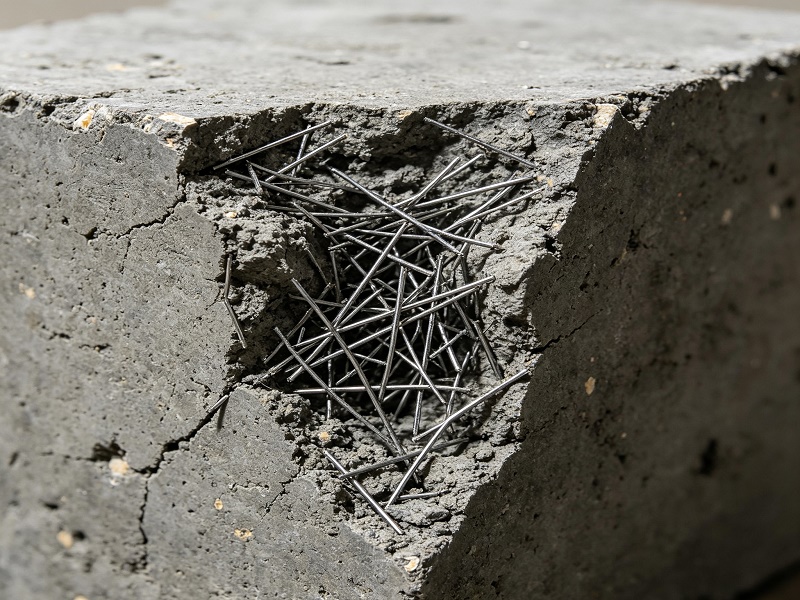
When it comes to reinforcing concrete, engineers and contractors have traditionally relied on steel rebar or welded wire mesh. These methods have been the industry standard for decades, providing proven structural integrity for everything from building foundations to bridge decks. However, steel fiber reinforced concrete has emerged as a compelling alternative, offering distinct advantages in crack control, durability, and construction efficiency.
But how do these reinforcement methods truly compare? Is steel fiber reinforced concrete a viable substitute for traditional reinforcement, or is it better suited as a complementary solution? This guide breaks down the key differences, advantages, limitations, and ideal applications for each approach, helping you make an informed decision for your next project.
Key Takeaways
| Factor | Steel Fiber Reinforced Concrete | Traditional Reinforcement (Rebar / Mesh) |
|---|---|---|
| Reinforcement Type | Randomly distributed steel fibers throughout the concrete mix | Discrete steel bars or welded wire mesh placed in specific positions |
| Crack Control | Superior micro-crack control; multidirectional reinforcement | Effective for large cracks; prone to micro-cracking |
| Labor & Installation | Simplifies construction; reduces labor time and costs | Requires skilled labor; time-intensive placement |
| Durability | Highly resistant to wear, fatigue, and corrosion | Susceptible to corrosion; requires periodic maintenance |
| Load Distribution | Uniform load distribution; reduces stress concentration | Load distribution depends on rebar placement |
| Design Flexibility | Ideal for complex shapes and irregular forms | Custom bending required; limits flexibility |
| Cost Efficiency | Lower material and labor costs for certain applications | Higher initial costs; necessary for heavy loads |
What Is Steel Fiber Reinforced Concrete?
Steel fiber reinforced concrete is a high-performance composite material that incorporates small, randomly distributed steel fibers throughout the concrete mix. These fibers—typically made from cold-drawn steel wire and available in various shapes such as hooked-end, corrugated, or straight—are added directly to the concrete during batching.
The primary function of steel fiber reinforced concrete is to enhance the material’s tensile strength, impact resistance, and durability at the micro-structural level. When concrete begins to crack under stress, the steel fibers bridge the cracks, transferring tensile forces across the crack interface and preventing the crack from propagating. This mechanism significantly improves post-crack behavior and overall structural toughness.
Steel fiber reinforced concrete does not rely on precise placement of reinforcement within forms. Instead, the fibers distribute uniformly throughout the entire concrete volume, providing multidirectional reinforcement that is not dependent on the skill of the installer.
What Is Traditional Reinforcement?
Traditional reinforced concrete relies on embedded steel rebar (reinforcing bars) or welded wire mesh to provide structural strength. These discrete reinforcement elements are placed within concrete forms before pouring, positioned according to engineering specifications to carry tensile loads and control cracking.
Rebar reinforcement involves placing steel bars in specific patterns—typically in grids or cages—to resist tensile forces in designated areas of a structural member. Welded wire mesh offers a prefabricated grid of steel wires that provides distributed crack control across slab-on-grade applications.
Traditional reinforcement has been extensively tested and remains a trusted method for structural support, particularly in applications requiring high load-bearing capacity. However, it demands skilled labor for placement, precise positioning to ensure effectiveness, and careful inspection to verify compliance.
Steel Fiber Reinforced Concrete vs Traditional Reinforcement: Key Differences
1. Crack Control and Crack-Bridging
One of the most significant advantages of steel fiber reinforced concrete is its superior crack control capability. The random distribution of steel fibers throughout the concrete matrix means that regardless of where a crack initiates, fibers are likely to intersect and bridge it. This multidirectional reinforcement provides crack control in all directions simultaneously.
Traditional reinforcement, by contrast, provides crack control primarily in the directions in which the rebar or mesh is oriented. Cracks can still form between reinforcement elements, and micro-cracking is a common concern even in well-designed conventionally reinforced structures.
2. Installation and Labor Requirements
Steel fiber reinforced concrete significantly simplifies construction by eliminating the need for manual rebar placement, tying, and inspection. Fibers are simply added to the concrete mix during batching—a process that requires no additional labor on-site. This can dramatically reduce installation time and labor costs.
Traditional reinforcement is labor-intensive and time-consuming. Rebar must be cut, bent, tied, and positioned with precision. Welded wire mesh requires careful placement, proper support (chairs), and attention to avoid displacement during concrete placement. These activities demand skilled labor and extend construction schedules.
3. Durability and Corrosion Resistance
Steel fiber reinforced concrete offers excellent resistance to wear, fatigue, and corrosion. Because the fibers are fully embedded within the concrete matrix and protected by the alkaline environment, they are less susceptible to corrosion than exposed rebar. This is particularly advantageous in environments exposed to deicing salts, seawater, or other corrosive agents.
Traditional reinforcement is susceptible to corrosion, particularly when concrete cover is insufficient or when cracks allow moisture and chlorides to reach the steel. Corrosion of rebar can lead to spalling, reduced structural capacity, and costly maintenance over the service life of the structure.
4. Load Distribution and Structural Performance
Steel fiber reinforced concrete provides uniform load distribution throughout the concrete section, reducing stress concentration and improving overall structural performance. The fibers act as a three-dimensional reinforcement network that enhances the material’s ability to distribute loads evenly.
Traditional reinforcement concentrates strength in specific locations where rebar is placed. While this allows for precise engineering of load-bearing capacity, it also creates zones of potential weakness between reinforcement elements.
5. Design Flexibility
Steel fiber reinforced concrete is ideal for complex shapes and irregular forms. Because the reinforcement is distributed throughout the mix, there are no limitations on form geometry or the need for custom bending of reinforcement bars.
Traditional reinforcement requires custom bending and placement to accommodate complex geometries, limiting design flexibility and increasing fabrication costs.
Advantages and Limitations of Each Approach
Advantages of Steel Fiber Reinforced Concrete
Enhanced crack resistance: Provides multidirectional micro-crack control
Lower maintenance costs: Highly durable and resistant to corrosion
Faster construction: Eliminates manual rebar placement
Better impact and fatigue resistance: Ideal for heavy-duty applications
Improved flexural strength: Can increase flexural strength by 40–80%
Increased toughness: Impact compression toughness can increase by 2–7 times
Lightweight potential: Can reduce cross-sectional dimensions compared to traditional designs
Limitations of Steel Fiber Reinforced Concrete
Cannot fully replace primary structural reinforcement: Steel fiber reinforced concrete excels at crack control and toughness but cannot carry the calculated tensile loads that primary reinforcement is designed for
Performance-based design required: Design relies on project-specific testing (e.g., ASTM C1609) rather than standardized calculations
Design code limitations: Many design codes lack published strength-reduction factors for FRC
Fiber balling risk: Improper mixing can lead to fiber clumping
Surface finishing challenges: Fibers can protrude from the surface, requiring attention during finishing
Advantages of Traditional Reinforcement
Proven structural integrity: Extensively tested and trusted method
Higher load-bearing capacity: Ideal for bridges, high-rise buildings, and large-scale infrastructure
Standardized design regulations: Well-established design codes and industry guidelines
Predictable performance: Easily calculable reinforcement solution
Limitations of Traditional Reinforcement
Labor-intensive installation: Requires skilled labor and significant time
Corrosion susceptibility: Requires periodic maintenance
Limited crack control: Prone to micro-cracking between reinforcement elements
Placement risks: Improperly placed rebar or mesh provides little to no benefit
Higher labor costs: Particularly for complex detailing
Cost Considerations
When comparing steel fiber reinforced concrete with traditional reinforcement, the cost picture is multifaceted. While the upfront material cost of steel fibers may be higher than plain concrete, the total installed cost often tells a different story.
Steel fiber reinforced concrete eliminates the need for rebar or mesh procurement, cutting, bending, tying, and placement—all of which are labor-intensive activities. Studies have shown that steel fiber reinforced concrete can reduce structural costs by 13–15% compared to conventional designs. The total cost of ownership using steel fibers in concrete bridge decks has been found to be less than traditional reinforced concrete.
Traditional reinforcement carries higher labor costs and longer installation times. However, for applications requiring extreme load capacity, the higher initial cost may be justified by the structural reliability and predictability that rebar provides.
Applications: Which Method Is Best Suited?
Steel Fiber Reinforced Concrete Is Best Suited For:
Industrial floors and warehouse flooring systems
Concrete pavements and airport runways
Tunnel linings and shotcrete applications
Precast elements and jointless floors
Slabs on grade requiring high crack resistance
UHPC prefabricated components and high-speed railway parts
Refractory materials and high-temperature applications
Traditional Reinforcement Is Best Suited For:
Bridges, overpasses, and high-rise structures
Heavy-duty foundations and infrastructure projects
Seismic-resistant buildings and earthquake-prone zones
Large-scale concrete structures requiring extreme load capacity
Areas with concentrated point loads (forklift aisles, loading docks)
Frequently Asked Questions (FAQ)
Q1: Can steel fiber reinforced concrete completely replace rebar?
A: No. Steel fiber reinforced concrete provides excellent crack control, toughness, and impact resistance, but it cannot replace primary structural reinforcement in load-bearing members. It is best used as a supplement to traditional reinforcement or in applications where rebar is not structurally required.
Q2: Is steel fiber reinforced concrete more expensive than traditional reinforcement?
A: The upfront material cost may be higher, but steel fiber reinforced concrete often reduces total installed cost by eliminating labor-intensive rebar placement. Studies show cost reductions of 13–15% compared to conventional designs.
Q3: Does steel fiber in concrete rust?
A: Steel fibers are fully embedded within the concrete matrix and protected by the alkaline environment, making them less susceptible to corrosion than exposed rebar. Copper or brass-coated fibers offer additional corrosion resistance.
Q4: What is fiber balling and how can I prevent it?
A: Fiber balling occurs when steel fibers clump together during mixing. It can be prevented by adding fibers gradually during dry mixing, using forced-action mixers, and avoiding excessive fiber dosages.
Q5: Which applications are best suited for steel fiber reinforced concrete?
A:Steel fiber reinforced concrete excels in industrial floors, pavements, tunnel linings, shotcrete, precast elements, and jointless slabs where crack resistance, durability, and fast construction are priorities.
Q6: Can I combine steel fiber reinforced concrete with traditional reinforcement?
A: Yes. The combination of steel fibers and rebars allows for better exploitation of both reinforcement solutions. This hybrid approach is often optimal for structural members requiring both crack control and high load capacity.
Q7: What standards apply to steel fiber reinforced concrete?
A:Steel fiber reinforced concrete is typically designed using performance-based testing such as ASTM C1609. Fibers should comply with standards including ASTM A820, EN 14889-1, and ISO 13270.
Why Choose Daye as Your Steel Fiber Partner
Choosing the right steel fiber supplier is as important as choosing the right reinforcement method. Ganzhou Daye Metallic Fibres Co., Ltd. has been a trusted manufacturer in the steel fiber industry since 2002, specializing in a comprehensive range of steel fiber products for concrete reinforcement.
Why Construction Professionals Trust Daye:
Over 20 years of expertise: Daye has accumulated extensive experience in both production and international export, serving clients across more than 28 countries.
Comprehensive product range: From micro steel fiber for UHPC to stainless steel fiber for corrosive environments, Daye offers steel fiber solutions for virtually every application.
Quality assurance: Daye's 20,000-square-meter facility is equipped with advanced production lines and precise testing instruments, with ISO9001 and CE certifications.
Global compliance: Daye's steel fiber meets ASTM A820, EN 14889-1, YB/T151-2017, and CECS 38:2004 standards.
Proven performance: Daye's steel fiber has been used in over 400 UHPC bridges globally and in major infrastructure projects worldwide.
Whether you are designing an industrial floor, a tunnel lining, or a high-performance precast element, Daye's steel fiber products and technical support team can help you achieve the optimal balance of performance, durability, and cost-efficiency. When you are ready to specify steel fiber reinforced concrete for your next project, partner with Daye—a steel fibre manufacturer you can trust.