




What are the disadvantages of steel fiber?
 May 11, 2026|
 View:459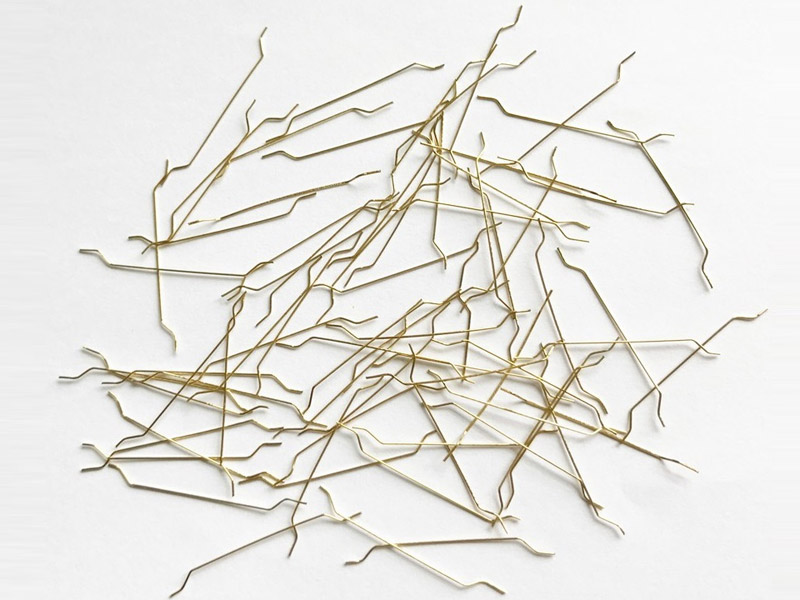
Ten Major Disadvantages of Steel Fiber Reinforced Concrete: A Comprehensive and Easy-to-Understand Analysis
Steel fiber reinforced concrete (SFRC) is made by adding fine steel fibers to ordinary concrete, making it stronger and more crack-resistant. While it sounds impressive, it also has some obvious drawbacks. Understanding these disadvantages can help you make wiser decisions in engineering projects.
1. Relatively Expensive
In simple terms: Using steel fibers is considerably more expensive than using ordinary steel reinforcement.
Detailed explanation:
The production cost of steel fibers themselves is high, and transportation is also costly (because steel is heavy). Although using steel fibers can save on the labor costs of tying steel reinforcement, overall, the initial investment still increases by 20%-50%. For projects with tight budgets, this can be a significant issue.
2. Concrete Becomes "Thicker" During Construction
In simple terms: After adding steel fibers, the fluidity of concrete decreases, making it harder to pour and finish smoothly.
Detailed explanation:
Imagine adding many fine steel wires to porridge—stirring and pouring would become more difficult. In actual construction, workers need to adjust the mix design or use specialized equipment to handle it, which increases costs and tests construction skills. If not handled properly, steel fibers may protrude from the concrete surface, which is neither aesthetically pleasing nor safe.
3. Prone to Rusting
In simple terms: Steel fibers are, after all, metal and can corrode in damp, salty environments.
Detailed explanation:
Areas like coastal regions, roads using de-icing salts, and near chemical plants—steel fibers are particularly prone to rusting in these environments. Once rust forms, it expands in volume and can crack the concrete. Although anti-corrosion coatings can be applied to steel fibers, that increases costs and doesn't guarantee permanent protection against rust.
4. Uneven Distribution of Fibers
In simple terms: Steel fibers tend to clump together or settle at the bottom in concrete, making uniform dispersion difficult.
Detailed explanation:
This is like sprinkling sesame seeds—some areas end up with more, others with less. Uneven fiber distribution leads to varying strengths in different parts of the concrete: some areas become very strong, while others remain weak. Moreover, during construction, it's hard to check how well the fibers are distributed, relying mostly on experience and luck.
5. Difficult Surface Finishing
In simple terms: Steel fibers can protrude from the concrete surface, affecting appearance and smoothness.
Detailed explanation:
During finishing, steel fibers are easily pulled to the surface, making it look "fuzzy." For areas requiring smooth surfaces (like mall floors or swimming pools), this is troublesome. Either extra effort is needed for grinding, or an additional overlay must be applied—both mean more time and money.
6. Lack of "Flexibility"
In simple terms: Steel fibers mainly prevent cracking but don't make concrete more ductile.
Detailed explanation:
During earthquakes, buildings need to be able to "sway" without collapsing—this is called ductility. Traditional steel reinforcement can give concrete some ductility, but steel fibers primarily work to hold cracks together and prevent them from widening. They don't significantly improve this "flexible" capability. Therefore, in seismic zones, steel fibers alone may not be sufficient and need to be used in combination with steel reinforcement.
7. Vulnerable to High Temperatures
In simple terms: In fires, steel fiber reinforced concrete may be more prone to spalling.
Detailed explanation:
Steel weakens and loses strength when heated. More critically, during a fire, the concrete surface heats up, and internal moisture turns into steam. If the pressure has no way to escape, combined with the different thermal expansion and contraction rates of steel fibers and concrete, it can cause the concrete surface to suddenly explode (professionally called "spalling"), accelerating structural damage.
8. Environmental Concerns
In simple terms: Producing steel fibers consumes high energy, and recycling old concrete is also problematic.
Detailed explanation:
Steel production itself is energy-intensive and high-emission. Although steel fibers can make buildings more durable, from a production standpoint, the carbon footprint is significant. Additionally, after a building is demolished, concrete with steel fibers is difficult to separate and recycle. It often ends up as waste in landfills, unlike ordinary steel reinforcement, which can be melted down and reused.
9. Lack of Unified Design Standards
In simple terms: There are no completely uniform standards for how to design and how much to use.
Detailed explanation:
Different countries and regions may have varying design requirements for steel fiber reinforced concrete. Engineers sometimes have to figure things out on their own or adopt conservative designs (adding more fibers), which increases design difficulty and uncertainty and may lead to material waste.
10. Not Suitable for All Applications
In simple terms: Thin elements and places with special requirements are not suitable for steel fibers.
Detailed explanation:
Very thin concrete slabs (e.g., 5 cm thick) don't provide enough space for steel fibers to work effectively. There are also special places, like hospital MRI rooms (steel fibers interfere with magnetic fields) and food processing plants (risk of metal contamination), where steel fiber reinforced concrete is not suitable.
Conclusion: Whether to Use Steel Fibers Depends on the Specific Situation
Steel fiber reinforced concrete is a good technology that solves many problems of traditional concrete, but it's not a cure-all. Before deciding to use it, be sure to consider comprehensively:
Whether the budget is sufficient—higher initial investment.
Whether the environment is suitable—be cautious in damp, corrosive environments.
Whether there is construction experience—higher requirements for mixing, pouring, and finishing.
Whether there are special requirements—such as needing smooth surfaces, being non-magnetic, etc.
Simply put, steel fiber reinforced concrete is like a specialized tool. It can play a huge role in the right places, but using it in the wrong situations can cause more trouble. Understanding its disadvantages isn't about rejecting it but about using it better.