




What Is Steel Fiber Reinforced Concrete and How It Works?
 Sep 24, 2026|
 View:6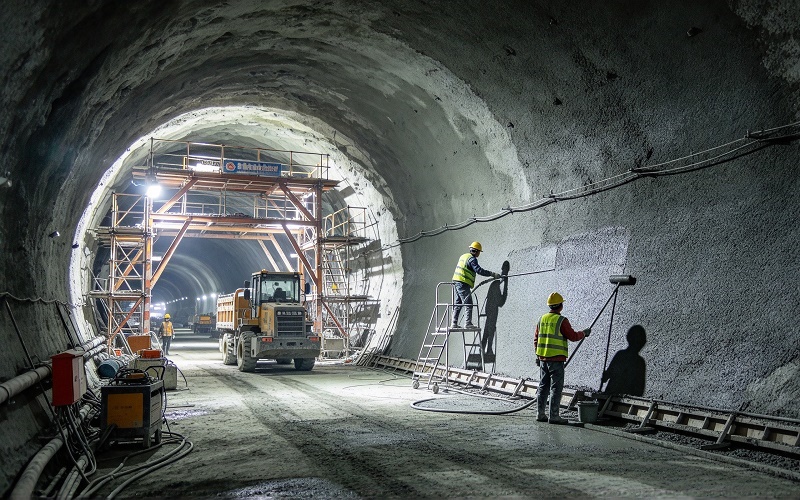
If you have ever watched a concrete slab crack within months of pouring or witnessed premature joint failure in an industrial floor, you already understand concrete's fundamental weakness: exceptional compressive strength paired with brittle, unreliable tensile performance. For decades, contractors relied on rebar and welded wire mesh to compensate, but steel fibres for concrete have emerged as a transformative reinforcement solution. This guide explains exactly what this composite material is, how it works at a microscopic level, and why it is transforming construction worldwide.
Key Takeaways
Steel fiber reinforced concrete (SFRC) contains thousands of discrete steel fibers distributed uniformly throughout the mix, providing three-dimensional reinforcement rather than two-dimensional planar coverage like rebar.
The primary working mechanism is crack bridging: fibers transfer tensile stress across opening cracks, increasing fracture energy by 40–100 times compared to plain concrete.
Performance benefits include up to 97% improvement in flexural strength, 50–70% smaller crack widths, 30–50% faster construction, and significantly lower lifecycle maintenance costs.
Typical dosage rates range from 15–60 kg/m³ depending on application, with fiber geometry and tensile strength mattering more than raw quantity.
Hooked-end steel fibers are the industry standard for structural applications, offering superior pull-out resistance through mechanical anchorage.
What Exactly Is Steel Fiber Reinforced Concrete?
Steel fiber reinforced concrete is a composite material consisting of hydraulic cements, aggregates, water, and uniformly dispersed short steel fibers of specific geometry, length, and diameter. Unlike traditional reinforcement placed in predetermined locations before pouring, these discrete reinforcing elements are distributed randomly throughout the mix during batching, creating "isotropic reinforcement" — meaning reinforcement is present in every direction, not just where you remembered to place it.
Modern manufacturing processes and improved fiber geometries have made SFRC a mainstream engineering solution recognized by ACI 318, EN 14889-1, and major building codes worldwide for applications ranging from industrial floors to tunnel linings.
How It Actually Works: The Crack-Bridging Mechanism
To understand why steel fibres for concrete are so effective, think about how plain concrete fails. It typically cracks at tensile stresses of just 2–4 MPa. Once a crack forms, nothing stops it from widening and propagating — the structure fails catastrophically in a brittle manner.
The fibers change this failure mode completely through a three-stage mechanism:
Pre-crack reinforcement: Even before visible cracks form, fibers provide internal restraint to micro-crack development during hydration and early-age shrinkage, reducing initial cracking tendency by up to 60%.
Crack bridging at initiation: The moment a micro-crack begins to open, any fiber crossing that crack plane immediately engages in tension. Instead of propagating freely, stress is transferred across the crack — like millions of tiny suspension bridge cables distributed throughout the matrix.
Post-crack energy absorption: As loading continues, fibers do not simply snap — they gradually pull out of the cement paste. For hooked-end fibers, this process requires enormous energy because the bent ends must straighten as they withdraw. This energy absorption, measured as "flexural toughness," represents a fundamental shift from brittle fracture to controlled, ductile deflection.
According to ACI Committee 544 data, adding just 1% fiber volume fraction can increase fracture energy by 40 to 100 times.
Performance Comparison: SFRC vs. Traditional Reinforcement
Performance Metric | Plain Concrete | Welded Wire Mesh | Steel Fiber Reinforced Concrete |
|---|---|---|---|
Compressive strength (28-day) | 30–50 MPa | 30–50 MPa | 32–54 MPa (+4–8%) |
Flexural strength (28-day) | 4–6 MPa | 5–7 MPa | 7–11 MPa (+40–97%) |
Residual strength after cracking | 0 MPa | 2–3 MPa | 3–7 MPa |
Crack width reduction | N/A | 30–40% | 50–70% |
Construction speed | Baseline | -20% slower | +30–50% faster |
Reinforcement labor cost | Baseline | Highest | 40–60% lower |
Impact resistance | Low | Moderate | 5–10x higher |
Shrinkage crack reduction | N/A | 20–30% | 50–80% |
Data compiled from ACI 544 reports and 2026 Portland Cement Association industry surveys.
Common Fiber Types and Applications
Not all steel fibres for concrete are created equal. Geometry, aspect ratio, and tensile strength are engineered for specific use cases:
Hooked-end fibers: The industry standard for structural applications. Bent ends create mechanical anchorage for superior pull-out resistance. Best for: industrial floors, tunnel linings, bridge decks.
Crimped/wavy fibers: Full-length undulations provide mechanical interlock. More economical for non-structural crack control. Best for: pavements, residential slabs, overlays.
Micro steel fibers: Extremely fine diameter, short length, very high tensile strength for ultra-high-performance concrete. Best for: bridge deck overlays, blast-resistant structures.
Stainless steel fibers: Corrosion-resistant alloy fibers for aggressive environments. Best for: coastal structures, wastewater treatment plants.
Frequently Asked Questions
Q: Can steel fibers completely replace rebar?A: In slabs-on-grade, shotcrete tunnel linings, and certain precast elements, steel fibre for concrete can fully replace rebar under ACI 318-19 guidelines. Elevated structural slabs typically require supplemental bars.
Q: Will steel fibers rust inside concrete?A: No. When properly embedded with adequate cover (25–40 mm), fibers remain in concrete's alkaline environment that passivates steel just like rebar. Minor surface rust staining is cosmetic only.
Q: How much fiber should I add?A: Dosages range from 15–25 kg/m³ for light crack control up to 30–50 kg/m³ for tunnel shotcrete and heavy industrial floors. Exceeding 60 kg/m³ risks fiber balling during mixing.
Q: Can it be pumped?A: Yes. Expect 10–30 mm of slump loss. Mid-range water reducers restore pumpability; a 100 mm diameter hose is standard.
Q: Do fibers damage mixing equipment?A: At standard dosages, wear is comparable to plain concrete. No special equipment modifications are required.
Final Thoughts: Choose Your Manufacturer Wisely
Through the powerful mechanism of three-dimensional crack bridging, steel fibres for concrete transform brittle concrete into a tough, durable composite that resists cracking, impact, and fatigue far better than conventionally reinforced concrete. Projects completed 20+ years ago continue to demonstrate excellent performance, with documented reductions in maintenance costs and extended service life.
When specifying steel fibre for your next project, material quality and manufacturing consistency matter as much as fiber geometry. Daye is a specialized steel fiber manufacturer producing premium hooked-end, crimped, and micro steel fibers engineered to meet strict international standards for tensile strength, dimensional consistency, and bond performance. Whether you are designing an industrial warehouse floor, tunnel lining, or high-performance precast element, choosing a reliable steel fiber manufacturer ensures you get consistent quality and technical support to realize SFRC's full potential on your project.