




Comprehensive Guide to Choosing the Right Steel Fiber Types for Construction
 Aug 04, 2026|
 View:225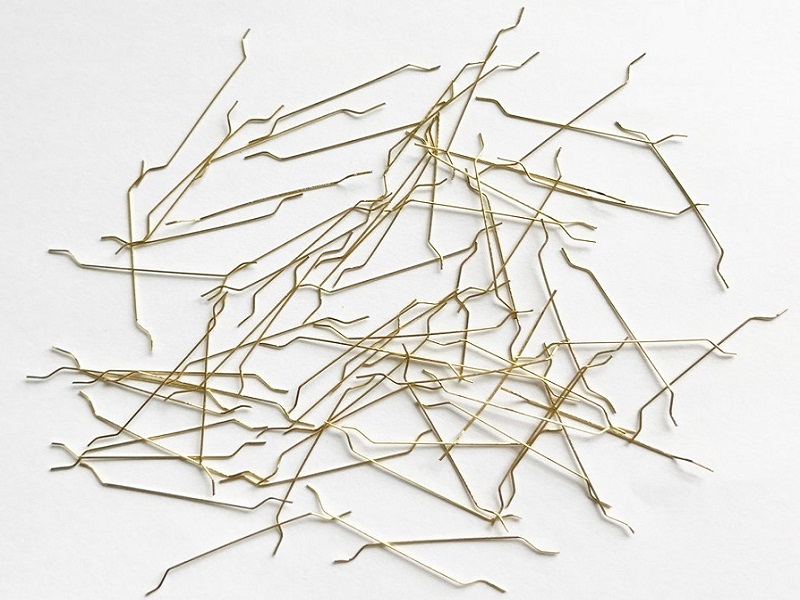
When it comes to reinforcing concrete, steel fiber has emerged as one of the most versatile and effective solutions available to engineers and contractors worldwide. From industrial floors and tunnel linings to bridge decks and precast elements, steel fiber offers superior crack control, enhanced durability, and significant labor savings compared to traditional reinforcement methods. But with so many steel fiber types on the market—each designed for specific applications and performance requirements—how do you know which one is right for your project?
This comprehensive guide will walk you through everything you need to know about selecting the right steel fiber for your construction needs. We'll explore the different steel fiber categories, key selection parameters, application-specific recommendations, and common pitfalls to avoid. Whether you're a contractor bidding on an industrial flooring project or an engineer specifying materials for a UHPC bridge component, this guide will help you make an informed, cost-effective decision.
Key Takeaways
| Selection Factor | What to Consider |
|---|---|
| Fiber Type | Hooked-end, straight, corrugated, or melt-extracted — each offers different bonding and performance characteristics |
| Fiber Geometry | Diameter (0.12–0.75 mm) and length (6–60 mm) determine aspect ratio and reinforcement efficiency |
| Tensile Strength | Ranges from 1,100 MPa to over 2,850 MPa — higher strength fibers are essential for UHPC and heavy-load applications |
| Coating | Brass/copper-coated fibers offer superior corrosion resistance and bond strength |
| Dosage | Typically 20–80 kg/m³ for most applications; UHPC may require 150–314 kg/m³ |
| Application | Match fiber type to project requirements — industrial floors, tunnel shotcrete, bridge decks, and precast elements each have unique needs |
| Standards Compliance | Verify ASTM A820, EN 14889-1, or ISO 13270 compliance for quality assurance |
Understanding Steel Fiber Types: A Comprehensive Overview
Not all steel fiber is created equal. The manufacturing process, geometry, and surface treatment all influence how the fiber performs within the concrete matrix. Below are the most common steel fiber types available today.
Hooked-End Steel Fiber
Hooked-end steel fiber is one of the most widely used types in construction. As the name suggests, these fibers feature a hooked or deformed end that provides exceptional mechanical anchorage within the concrete matrix. When concrete begins to crack, the hooked ends resist pull-out forces, allowing the fiber to continue bridging the crack and transferring tensile stress.
Best suited for: Industrial floors, tunnel linings, shotcrete, pavements, and precast elements.
Key advantages:
Superior crack resistance and post-crack load capacity
Excellent bonding with the concrete matrix
Available in diameters of 0.2–0.56 mm and lengths of 13–40 mm
Tensile strength up to 2,850 MPa
Straight Steel Fiber
Straight steel fiber offers a simpler geometry that disperses evenly throughout the concrete mix. While it may not provide the same mechanical anchorage as hooked-end fibers, straight fibers are highly effective for applications requiring uniform reinforcement and ease of mixing.
Best suited for: Shotcrete, refractory applications, and general-purpose concrete reinforcement.
Key advantages:
Excellent dispersion characteristics
Lower risk of fiber balling during mixing
Cost-effective for many applications
Micro Steel Fiber
Micro steel fiber is characterized by its small diameter (typically 0.12–0.3 mm) and short length (6–30 mm). These fine fibers are specifically engineered for high-performance concrete applications such as UHPC (Ultra-High Performance Concrete), RPC (Reactive Powder Concrete), and high-speed railway prefabricated components.
Best suited for: UHPC structural elements, RPC cover panels, high-speed railway parts, and thin precast sections.
Key advantages:
Ultra-high tensile strength exceeding 2,850 MPa
Brass-coated surface enhances bonding and corrosion resistance
Elastic modulus of 200 GPa maintains structural integrity under extreme stress
Withstands temperatures up to 800°C
Brass/Copper-Coated Steel Fiber
Brass or copper-coated steel fiber offers enhanced bonding with the concrete matrix while providing superior corrosion resistance, particularly in humid or underground environments. The coating improves the chemical bond between the fiber and the cement paste, promoting stronger interfacial bonding for improved load transfer after cracking.
Best suited for: Marine structures, bridges exposed to deicing salts, architectural exposed concrete, and UHPC applications.
Key advantages:
Excellent corrosion resistance
Stronger interfacial bond with cement paste
Prevents rust staining in exposed applications
Stainless Steel Fiber
For the most demanding corrosive environments, stainless steel fiber provides unparalleled protection against rust and degradation. Available in various grades (including ME304, ME310, ME330, and ME446), stainless steel fibers are ideal for projects where long-term durability in aggressive environments is paramount.
Best suited for: Marine engineering, chemical plants, wastewater treatment facilities, and refractory applications.
Key advantages:
Superior corrosion resistance
Available in straight or hooked-end configurations
Tensile strength exceeding 1,800 MPa
Key Parameters for Selecting Steel Fiber
Choosing the right steel fiber goes beyond just picking a type. Several technical parameters must be evaluated to ensure optimal performance.
1. Fiber Diameter and Length
The diameter and length of steel fiber determine its aspect ratio (length ÷ diameter), which directly influences reinforcement efficiency.
| Fiber Type | Diameter Range | Length Range | Typical Aspect Ratio |
|---|---|---|---|
| Micro Steel Fiber | 0.12–0.3 mm | 6–30 mm | 30–100 |
| Hooked-End Steel Fiber | 0.2–0.56 mm | 13–40 mm | 40–80 |
| Stainless Steel Fiber | 0.16–0.75 mm | 13–30 mm | 20–60 |
General guideline: Higher aspect ratios (closer to 100) provide superior crack control but require careful mixing to avoid fiber balling. For UHPC applications, fibers with aspect ratios around 65 offer an optimal balance of dispersion and performance.
2. Tensile Strength
The tensile strength of steel fiber determines its ability to withstand tensile forces across cracks without breaking.
General crack control: ≥ 1,100 MPa
High-performance concrete: ≥ 2,000 MPa
UHPC structural elements: ≥ 2,850 MPa
3. Coating Type
| Coating | Advantages | Best Applications |
|---|---|---|
| Brass/Copper-coated | Corrosion resistance, enhanced bond, prevents rust staining | Marine, bridges, UHPC, exposed concrete |
| Non-coated | Lower cost | Dry interior, non-chloride environments |
4. Fiber Shape
Hooked-end: Superior mechanical anchorage; ideal for crack control and load transfer
Straight: Excellent dispersion; suitable for general reinforcement
Corrugated: Enhanced bond through surface deformation
Matching Steel Fiber to Application Requirements
Different projects impose different demands on steel fiber. Below is a breakdown of how to match fiber specifications to specific application categories.
Industrial Floors and Pavements
Industrial floors require steel fiber that provides excellent abrasion resistance, crack control, and fatigue resistance.
Recommended specifications:
Type: Hooked-end or straight
Diameter: 0.5–0.75 mm
Length: 30–50 mm
Dosage: 20–30 kg/m³
Tensile strength: ≥ 1,100 MPa
Tunnel Linings and Shotcrete
Tunnel applications demand steel fiber that enhances impact resistance and prevents spalling.
Recommended specifications:
Type: Hooked-end
Diameter: 0.35–0.56 mm
Length: 25–40 mm
Dosage: 25–35 kg/m³
UHPC Structural Elements
UHPC requires the highest-quality steel fiber for ultra-high compressive strength and post-crack ductility.
Recommended specifications:
Type: Micro steel fiber, brass-coated
Diameter: 0.12–0.2 mm
Length: 13–20 mm
Dosage: 150–314 kg/m³
Tensile strength: ≥ 2,850 MPa
Bridge Decks and Highway Pavements
Bridges face dynamic loading, deicing salts, and freeze-thaw cycles.
Recommended specifications:
Type: Hooked-end, brass-coated
Diameter: 0.2–0.35 mm
Length: 13–25 mm
Dosage: 40–60 kg/m³
Tensile strength: ≥ 2,000 MPa
Economic Advantages of Steel Fiber Reinforcement
Beyond performance, steel fiber offers significant economic benefits that make it an attractive alternative to traditional reinforcement.
Concrete consumption reduced by 30–50% under the same strength
Rebar partially or completely eliminated, or rebar diameter reduced by 1–2 mm
Construction cycle shortened by 25%, ideal for projects requiring continuous and fast concrete placement
Mixing as conventional concrete, no extra equipment needed
Frequently Asked Questions (FAQ)
Q1: What is the most common type of steel fiber used in construction?
A: Hooked-end steel fiber is the most widely used type due to its superior mechanical anchorage, excellent crack resistance, and strong bonding with the concrete matrix. It is suitable for industrial floors, tunnel linings, shotcrete, and pavements.
Q2: How do I choose between micro steel fiber and macro steel fiber?
A: Choose micro steel fiber (0.12–0.3 mm diameter) for UHPC, RPC, high-speed railway parts, and thin precast sections where high tensile strength (>2,850 MPa) and fine dispersion are required. Choose macro steel fiber (0.5–1.0 mm diameter) for industrial floors, tunnel shotcrete, and heavy-duty pavements where post-crack load transfer and impact resistance are priorities.
Q3: Does steel fiber in concrete rust?
A: Brass-coated or copper-coated steel fiber provides excellent corrosion resistance, even in chloride-rich environments. The coating acts as a barrier, protecting the steel core from moisture and chlorides. Non-coated steel fibers can rust if exposed at the concrete surface, which is why coated versions are preferred for architectural or exposed applications.
Q4: What is the recommended steel fiber dosage for UHPC?
A: For UHPC structural elements, recommended steel fiber dosage typically ranges from 150 to 314 kg/m³. The exact dosage depends on the specific performance requirements, fiber type, and mix design. For high-performance concrete, dosages of 40–60 kg/m³ are common for bridge decks and heavy-load pavements.
Q5: Can steel fiber completely replace rebar?
A: No. Steel fiber provides excellent crack control, toughness, and impact resistance, but it cannot replace primary structural reinforcement (rebar) in load-bearing members. It is best used as a supplement to traditional reinforcement or in applications where rebar is not structurally required.
Q6: What standards should steel fiber comply with?
A: High-quality steel fiber should comply with ASTM A820 (US standard), EN 14889-1 (European standard), and ideally ISO 13270 (global standard). CE certification confirms compliance with European requirements.
Q7: How do I prevent fiber balling during mixing?
A: Fiber balling occurs when steel fiber clumps together during mixing. Prevent it by: adding fibers gradually during dry mixing, using forced-action mixers, avoiding excessive fiber dosages, and ensuring proper mixing time (typically 1–2 minutes longer than plain concrete).
Why Choose Daye as Your Steel Fiber Partner
Selecting the right steel fiber is only half the equation. Partnering with a manufacturer that understands your application, supports your project from start to finish, and delivers consistently high-quality materials is equally important.
Ganzhou Daye Metallic Fibres Co., Ltd. has been a trusted name in the steel fiber industry since 2002. With over 20 years of expertise and a state-of-the-art facility with 50,000-ton annual capacity, Daye specializes in manufacturing a comprehensive range of steel fiber products for concrete reinforcement.
Why Construction Professionals Across the Globe Trust Daye's Steel Fiber:
Comprehensive Product Range: From micro steel fiber for UHPC to stainless steel fiber for corrosive environments, Daye offers steel fiber solutions for virtually every application. Products include hooked-end, straight, brass-coated, and stainless steel variants.
Quality Assurance: Daye's 20,000-square-meter facility is equipped with advanced production lines and precise testing instruments. The company holds ISO9001 Quality System certification and CE Certificate of Conformity.
Global Compliance: Daye's steel fiber meets ASTM A820, EN 14889-1, YB/T151-2017, and CECS 38:2004 standards.
Proven Performance: Daye's steel fiber has been used in over 400 UHPC bridges globally and exported to more than 28 countries.
End-to-End Solutions: From R&D support to bulk order fulfillment within 15 days, Daye provides comprehensive service.
Competitive Pricing: Direct factory pricing with MOQ flexibility and samples available.
Whether you are designing an industrial floor, a tunnel lining, a bridge deck, or a high-performance UHPC element, Daye's steel fiber products and technical support team can help you achieve the optimal balance of performance, durability, and cost-efficiency.
When you are ready to specify the right steel fiber for your next project, partner with Daye—a steel fiber manufacturer you can trust.